

Hydration’s role in performance — from endurance to power and more

Written by Kathleen Ferraro (opens in a new tab)
Medically reviewed by Swapna Ghanta, MD (opens in a new tab) and Eliza Savage, MS, RD, CDN (opens in a new tab)
If you're training hard but feeling sluggish, cramping up, or taking forever to recover, hydration might be the missing link. And no, chugging plain water isn’t always enough. Getting the right balance of fluids AND electrolytes can be a game-changer for performance, stamina, and recovery.
Hydration and athletic performance go way beyond just sipping water when you're thirsty. Getting the right mix of fluids and electrolytes is one of the most powerful ways to support endurance, strength, and recovery — but it’s often overlooked.
Most people know they need to "drink enough water" to stay hydratedOpens in a new tab. But few understand what hydration actually means at a cellular level, or how it affects the nervous system, muscles, joints, and even the brain during a workout.
“It’s about getting the right balance of water and electrolytes for your individual physiology, training demands, and lifestyle,” says Luis Villaseñor, MSOpens in a new tab, a sports dietitian, personal trainer, and LMNT co-founder. “Whether you’re an elite athlete or weekend warrior, dial in your electrolytes and you’ll feel the difference.”
Let’s unpack what hydration really does for the body during training and why it’s essential for athletic performance, not just a nice-to-have.
Understanding Hydration
Hydration is the balance of fluids and electrolytesOpens in a new tab inside the body. It’s not just about drinking enough water — it’s about keeping the right ratio of water to essential electrolytes like sodium, potassium, and magnesium.
"Think of fluid balance like the Wi-Fi connection for your muscles," says Mike IsraetelOpens in a new tab, PhD, a sports physiologist, co-founder of Renaissance Periodization, and LMNT Partner. "When everything’s flowing smoothly, your muscles communicate efficiently, your heart pumps easily, and your body temperature stays in check."
But dehydration can lead to muscle weakness, cramping, and slower reaction times, all of which can decrease your physical performance, he says.
Water alone isn’t enough to keep you well-hydrated, though, says Villaseñor. Electrolytes — particularly sodium, potassium, and magnesium — are also key for keeping body fluids in balance. They help fuel other key bodily functions, too, like heart rate and muscular contractions.
Why Hydration is Essential for Athletic Performance
Proper hydration is about more than quenching thirst. It's about priming the body for peak output, says Dr. Israetel. Here are the benefits of hydrationOpens in a new tab for performance:
- Maintaining Blood Volume: Higher blood volumeOpens in a new tab helps deliver more oxygen and nutrients to working muscles, supporting sustained performance.
- Improving Cardiovascular Efficiency: Efficient heart and vessel functionOpens in a new tab ensures oxygen-rich blood reaches muscles quickly and waste is removed effectively, reducing fatigue.
- Supporting Energy Production: Cellular energy systems (like ATP generation) power muscle contractions, and their speed and efficiency influence enduranceOpens in a new tab and stamina.
- Regulating Body TemperatureOpens in a new tab: Hydration is key to keeping the body cool during exercise. Sweating helps dissipate heat, but without enough fluids, the body struggles to sweat effectively, leading to overheating. Left unchecked, this can increase the risk for heat-related illnesses like heat exhaustionOpens in a new tab or heat strokeOpens in a new tab.
- Supporting Cognitive Function and Decision-Making: Even mild dehydration can impair focus, memory, and reaction time — all crucial mental and physical skills during training. One studyOpens in a new tab showed that after just 36 hours without water, people’s memory and attention dropped. However, rehydrating led to notable improvements in these areas, highlighting the importance of maintaining optimal hydration for mental performance.
- Lowering Injury Risk: Hydrated muscles and joints are more pliable and resilient. Proper hydration lubricates joints, reducing the risk of musculoskeletal injuriesOpens in a new tab like muscle pulls and strains.
- Aiding Recovery: Electrolyte-rich hydration helps muscles recover properly after workouts.
Consequences of Dehydration in Athletes
Dehydration isn’t just uncomfortable. It can be dangerous. "Dehydration is the athletic equivalent of forgetting to charge your phone before a long day out," Dr. Israetel says. "Sluggishness, cramps, and reduced endurance are the early warning signs. Push it too far and you’re risking dizziness, overheating, and impaired cognitive function," — which can lead to poor decision making.
That’s why pre-hydration — starting your day or workout already well-hydrated — is key. Think of it as running on a full tank rather than only fueling when the tank is empty (more on that in a moment).
If you notice these symptoms, it’s time to rehydrate with fluids that contain electrolytesOpens in a new tab, he says. Otherwise, you run the risk of affecting athletic performance in a number of ways, including:
- Decreased Athletic Performance and Endurance: The muscles receive less oxygen and nutrients, causing fatigue and a drop in stamina.
- Increased Risk of Heat IllnessOpens in a new tab: Without enough fluids, the body can’t regulate temperature properly, which may lead to dangerous overheating.
- Negative Impact on Muscle Strength and Reaction Time: Dehydration disrupts nerve signaling and muscle contractionsOpens in a new tab, increasing the chance of cramps, weakness, and slower responses.
- Increased Risk of Injury: “Dehydrated athletes are also at higher risk of hurting themselves by pulling a muscle or tendon because dry tissues are typically more brittle,” says Dr. Israetel.
Optimal Hydration Strategies for Athletes
When you drink electrolytes matters:
- Topping off before exercise helps you start strong
- Sipping during keeps you going
- Rehydrating after helps the body recover faster
Total intake matters, too. Make sure you’re getting enough sodium, especially on active days. (Need help figuring that out? Try our new Sodium Intake CalculatorOpens in a new tab.) The goal is to strike the right balance — not overdo it.
So what does smart timing actually look like? Let’s break it down.
Before Exercise
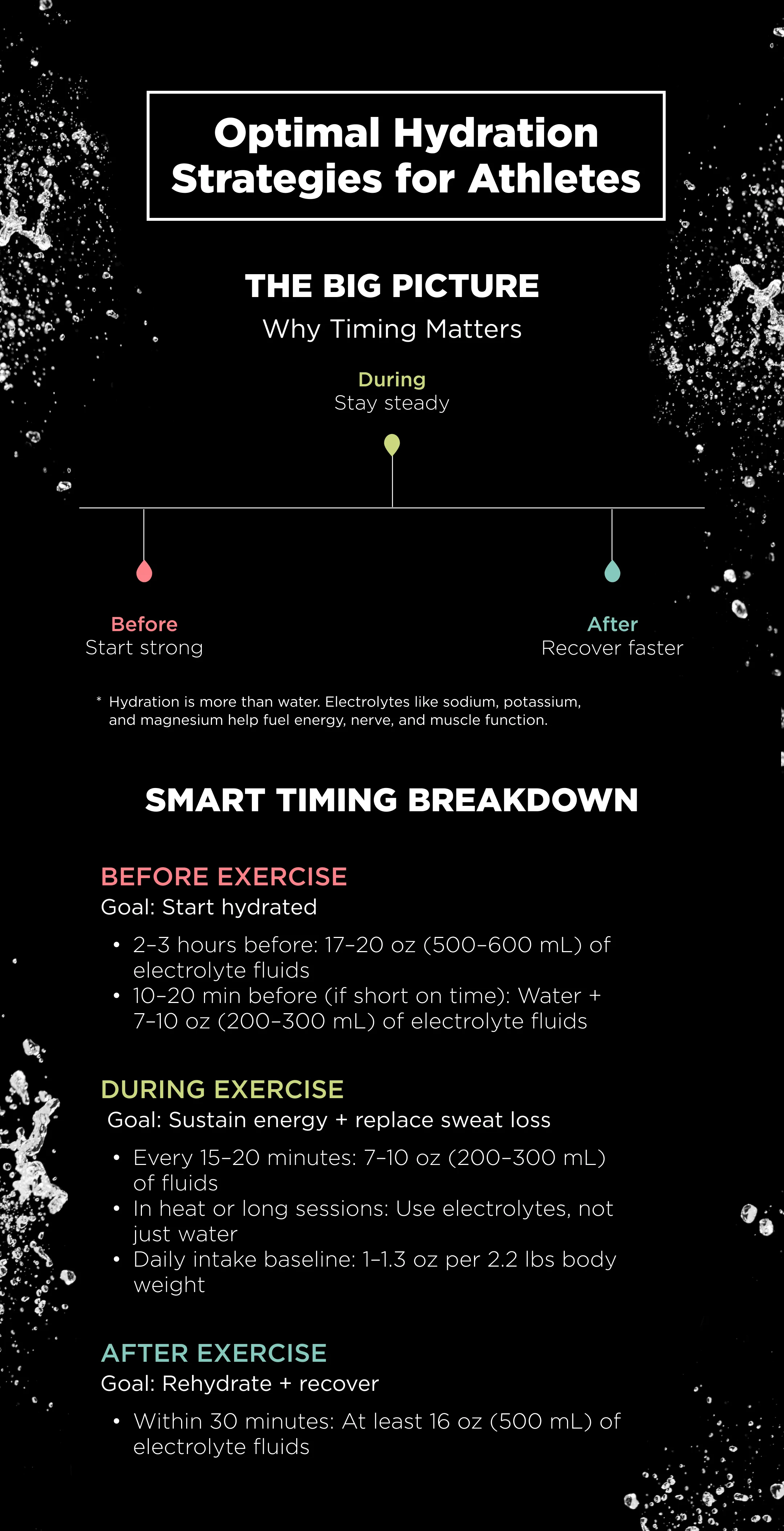
Before you start a workout, Dr. Israetel says it’s a good idea to “preload” electrolyte fluids by drinking about 17 to 20 ounces (oz) — that’s 500 to 600 milliliters (mL) — around two or three hours ahead of time. Think of it as giving the body a strong head start with water and electrolytes.
For early morning workouts, when you don’t have that much lead time, aim to drink water 10 to 20 minutes before your workout and for an added boost, 7 to 10 ounces (about 200 to 300 millilitersOpens in a new tab) of electrolyte fluids throughout your workout to stay properly hydrated.
During Exercise
If your workouts are under an hour or don’t involve excessive sweating, Dr. Israetel recommends drinking 7 to 10 oz (200 to 300 mL) of fluid every 15 to 20 minutes.
But if you’re sweating heavily — especially during prolonged workouts or in hot, humid conditions — plain water may not be enough to keep energy steady and the muscles working smoothly.
In those cases, it’s important to include electrolytesOpens in a new tab like sodium, potassium, and magnesium. These help replace what you lose through sweat and keep the muscles and nerves firing right. Some experts recommend tailoring your electrolyte intake to your body size and sweat rate. In general, though, Villaseñor recommends drinking 1 to 1.3 oz of fluid per 2.2 pounds of body weight per day.
After Exercise
After exercise, the goal is to rehydrate and recover. Dr. Israetel recommends drinking at least 16 oz (500 mL) of electrolyte fluids in the first 30 minutes after you finish. That helps replace what you lost and jump-starts recovery.
How you hydrate also depends on the workout, according to Dr. Israetel:
- For long, steady endurance sessions, keep sipping consistently with balanced electrolytes to maintain energy.
- For intense, stop-and-go workouts like HIIT, focus on electrolytes and fluids between bursts to handle fast sweat loss and muscle demands.
For both, though, “having good hydration before you begin activity is critical, as making up lost ground during activity itself is very tough,” says Dr. Israetel.
Good hydration also works best alongside solid nutrition to keep electrolyte levels balanced around the clock. SodiumOpens in a new tab, potassiumOpens in a new tab, and magnesiumOpens in a new tab are found in a wide variety of whole foods, including:
- Table salt
- Fruits like bananas and avocados
- Vegetables like leafy greens and sweet potatoes
- Nuts
- Beans
- Whole grains
Choosing the Best Sports Drink for Hydration
Not all sports hydration drinks are created equal. To support real performance, a hydration drinkOpens in a new tab should deliver targeted electrolytes to replenish what you lose through sweat without unnecessary added sugars. Here's what to look for:
- A balance of electrolytes: Villaseñor recommends choosing drinks for dehydration that contain a mix of sodium, potassium, and magnesium, all of which are crucial for optimal performance. Sodium is the MVP here: It helps the body retain fluid, supports nerve and muscle function, and prevents cramping, especially in hot conditions or long training sessions.
- Low or no sugar: Many sports drinks are packed with added sugars — which can actually slow hydration by disrupting electrolyte absorptionOpens in a new tab, says Dr. Israetel. The best sports drink for hydration doesn’t contain added sugars so you can avoid these issues. Healthy sports drinks with clean formulas work better and feel better.
- A flavor you enjoy: Taste matters more than you might think, says Dr. Israetel. Choosing a flavor you actually like makes it easier to hydrate consistently.
You can also explore powders as a more convenient, on-the-go option for replenishing electrolytes. LMNT delivers a science-backed formulationOpens in a new tab designed for performance hydrationOpens in a new tab, full of everything you need and nothing you don’t, including:
- 1,000 milligrams (mg) sodium
- 200 mg potassium
- 60 mg magnesium
- 0 grams of sugar
Common Myths About Sports Hydration
There are a few persistent myths about hydration that can trip up even experienced athletes. Here are the most common, plus what the science actually says.
Myth: Thirst Signals Dehydration
One common belief is that thirst is a reliable signal for when to drink electrolytes. But researchOpens in a new tab suggests that thirst is actually a lagging indicator — meaning by the time you feel thirsty, your body has already lost some fluids. Even mild dehydrationOpens in a new tab (as little as 1–2% of your body weight in water) can cause:
- Fatigue
- Headaches
- Impaired focus and reaction time
- Decreased physical performance
- Less frequent or darker urine
- Dry/sticky mouth
- Muscle cramps
- Confusion
- Sunken eyes or cheeks
- Skin that doesn’t immediately flatten back after you pinch it
Fact: Feeling thirsty doesn’t mean you’re dangerously dehydrated. It’s your body’s natural early warning system to prompt you to drink before serious issues arise. So, don’t ignore thirst. It means your body needs water. But also don’t wait for thirst as your only cue, especially if you’re active, in hotter temperatures, at a high elevation, or prone to forgetting to hydrate.
Instead, stay ahead of it by hydrating consistently throughout the day, drinking fluids before, during, and after workouts, and paying attention to signs of dehydration, like dark urine or fatigue.
Myth: Electrolyte Drinks Are Only for Athletes
It’s a common misconception that professional athletes are the only ones who need to refuel with electrolyte fluids.
Fact: In reality, anyone who does intense or prolonged activityOpens in a new tab (or sweats excessively due to extra factors like heat) can benefit from replacing lost electrolytes, not just elite competitors, says Villaseñor.
Other lifestyle factors, like sauna useOpens in a new tab, excessive coffeeOpens in a new tab or alcohol intakeOpens in a new tab, fastingOpens in a new tab, and low-carb dietsOpens in a new tab, can all deplete your electrolytes and are cause for refueling, he adds.
Myth: You Don’t Need Electrolytes in the Morning
Many people assume a glass of water is enough to start the day or that electrolytes are only necessary after a workout.
Fact: Your body can wake up dehydratedOpens in a new tab. You lose fluids and electrolytes overnight through sweat, urine, breathing, or by avoiding water before bed to prevent nighttime bathroom trips.
Rehydrating with both water and sodium in the morning helps restore fluid balance and support brain function. Without enough sodiumOpens in a new tab, symptoms like fatigue, headaches, and muscle cramps are more likely — especially if you overhydrate with plain water.
Myth: The More Water, the Better
Finally, there’s the idea that you can never drink too much water.
Fact: Overhydrating without replenishing sodium can dilute blood sodium levels and lead to hyponatremiaOpens in a new tab. This is a potentially dangerous condition that causes symptoms like nausea, headache, confusion, and in severe cases, seizures.
“Hyperhydration is hydration’s overzealous cousin,” says Dr. Israetel. “If you're peeing clear and plenty in the hours leading up to training, no extra hydration attempts are needed or wise at that point. Get hydrated first, then coast on refilling versus overfilling.”
Practical Hydration Tips for Athletes
Staying properly hydrated isn’t about chugging water randomly throughout the day — it’s about being intentional. With the right strategies, you can keep fluid and electrolyte levels dialed in to support energy, performance, and recovery.
Here are some smart, science-backed ways to make hydration part of a training routine:
- Establish a Hydration Plan: Sweat rate varies widelyOpens in a new tab from person to person. To dial in hydration, start by paying attention to how much you sweat during different types of workouts and conditions. The more fluid you lose, the more you need to replace. Villaseñor recommends that athletes weigh themselves pre- and post-workout: “If you lose more than 2 percent of your body weight during exercise, you’re under-hydrating,” he says.
- Recognize the Early Signs of Dehydration: Don’t wait until you’re dizzy or crampingOpens in a new tab to realize you’re behind on fluids. Early signs of dehydration include thirst, dry mouth, and weakness. If you notice these cues, it’s time to pause and hydrate. If you’ve been sweating heavily or in the heat, it’s best to rehydrateOpens in a new tab with electrolytes, says Dr. Israetel. Salt stains on your clothes are one telling clue that it’s time to replenish sodium.
- Use Technology: Some wearablesOpens in a new tab and fitness apps can help you track hydration levels and fluid loss more precisely. Some platforms even allow you to log water intake or estimate sweat loss based on environmental conditions and workout intensity, helping you build a more personalized hydration routine.
- Include Electrolytes, Not Just Water: Water alone might not cut it, especially during longer workouts, high-intensity intervals, or training in the heat, says Dr. Israetel. Sweat doesn’t just remove water — it also drains essential electrolytes (you guessed it: sodium, potassium, and magnesium). Replacing those is key to avoiding cramps, fatigue, and performance drops. Consider adding an electrolyte mix like LMNTOpens in a new tab to water for efficient, zero-sugar rehydration.
- Check Your Pee (Seriously): One of the easiest ways to monitor hydration status? Take a look at your urine. “Pale yellow usually indicates good hydration,” says Villaseñor. “Clear all the time may mean overhydration, while dark yellow may signal dehydration.”
Key Takeaways
- Hydration isn’t just about drinking water — it’s about maintaining the right balance of fluids and electrolytes in the body.
- Electrolytes like sodium, potassium, and magnesium are essential for energy production, muscle function, nerve signaling, and overall athletic performance.
- Losing these minerals through sweat can lead to dehydration, which impairs endurance, slows cognitive functions like focus and reaction time, and increases injury risk such as cramps and strains.
- When you hydrate matters. Preload with 17 to 20 oz (500 to 600 mL) of water two to three hours before exercise. If you’re an early morning exerciser, drink 7 to 10 oz (200 to 300 mL) of water 10 to 20 minutes before you start moving.
- Sip 7 to 10 oz (200 to 300 mL) every 15 minutes of your workout. Prioritize electrolyte-rich fluids if you’re sweating heavily or in hot, humid conditions.
- Rehydrate with at least 16 oz (500 mL) of electrolyte fluids after you exercise.
- Because sweat rates and workout demands vary, athletes need hydration strategies tailored to their specific activity type, intensity, and environment.
Frequently Asked Questions (FAQs)
How does hydration affect athletic performance?
Hydration helps the cardiovascular system function efficiently, allowing the heart to pump blood and oxygen to the muscles with less strain. It also helps regulate body temperature, preventing overheating during intense workouts. Staying hydrated supports mental sharpness by maintaining focus and reaction time, and it keeps muscles functioning properly to avoid cramps and fatigue, all of which are essential for performance.
How much water should I drink a day as an athlete?
There’s no one-size-fits-all recommendation for how much to drink per day, as everyone’s hydration needs are different. In general, though, Villaseñor recommends drinking 1-1.3 oz per 2.2 pounds of body weight per day. And when it comes to physical activity, Dr. Israetel recommends drinking 17 to 20 oz (500 to 600 mL) of fluids about two to three hours before a workout. If you work out in the early morning and don’t have hours to spare, drink 7 to 10 oz (200 to 300 mL) of water 10 to 20 minutes beforehand.
During exercise, sip 7 to 10 oz (200–300 mL) every 15 to 20 minutes, adding electrolytes for long or hot sessions.
Afterward, rehydrate with at least 16 oz (500 mL) within 30 minutes to aid recovery.
What is the best electrolyte for athletes?
Sodium takes the crown, says Villaseñor, especially for athletes who sweat a lot or do endurance sports. It helps the body retain fluids and prevents muscle cramps. And together, sodium, potassium, and magnesium support muscle contraction, nerve signaling, and recoveryOpens in a new tab — making them crucial for performance and hydration.
How does dehydration affect running performance?
Even mild dehydration can lead to sluggishness, cramps, and reduced endurance, says Dr. Israetel. For instance, researchOpens in a new tab has found that mild dehydration is linked to increased fatigue, physiological strain. If you continue without rehydrating, you also risk dizziness, an increase in body temperature, and impaired cognition. Altogether, this can put you at risk for decreased performance and injury.
How does hyperhydration affect sports performance?
Drinking too much water without enough electrolytes can dilute sodium in the blood, disrupting the delicate balance the body needs to function. Hyperhydration — and resulting sodium deficiency — can impair brain function and muscle performance, leading to symptoms like nausea, dizziness, and confusion. In severe cases, it can cause hyponatremia, a dangerous condition that requires immediate medical attention.