
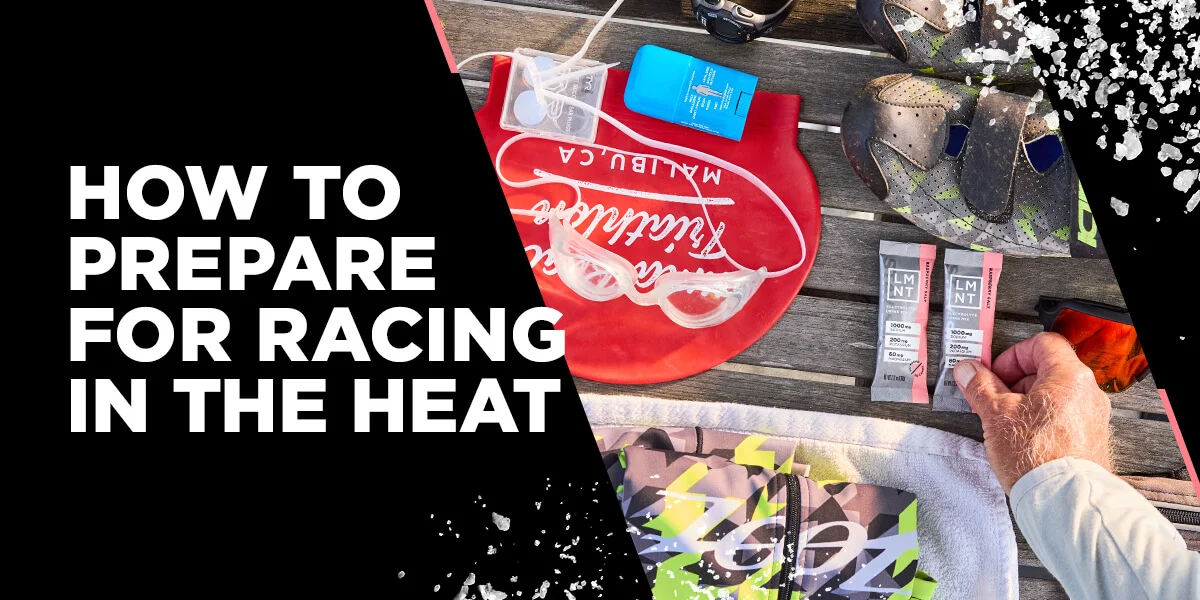

Professional endurance athlete, running coach, and LMNT partner Zach BitterOpens in a new tab has raced 100 miles in triple-digit temperatures, including the Javelina JundredOpens in a new tab (a 100 mile trail race) through the Arizona desert. In the heat, your heart rate and body temperature climbOpens in a new tab, you burn through stored carbs faster, and electrolytes can quickly get thrown out of balance.
That’s why Bitter treats heat adaptation as its own training variable. Ahead of hot events, he uses a mix of easy runs in the heat and sauna sessions to help his body hold onto fluid, regulate temperature, and handle the added cardiovascular strain that comes with exercising in high temperatures.
Here’s how heat adaptation works and how running coaches including Bitter and Bailey Lasko Opens in a new tabadvise folks to train for hot conditions, so once you arrive at the start line you’re primed for the demands of a hot race.
How Heat Adaptation Works
Heat adaptation is what it sounds like: training your body to perform better in hot conditions by repeatedly running in high temps or strategically using a hot tub or sauna.
Your core temperature generally sits around 97.9°F (36.6°C), but exercise pushes it higher. Add environmental heat and it climbs even more.
Well-trained athletes can reach core temps of 106.7°FOpens in a new tab (41.5°C) when exercising in the heat. That number sounds scarier than it is. Your body can handle it, but performance can unravel. When your core temperature climbs:
- The body reroutes blood to the skin to dump heat, which increases cardio strainOpens in a new tab and heart rate.
- The cardiovascular system splits resources between powering movement and keeping core temperature under control.
- Your body is left with less capacity to deliver oxygen to working muscles.
Heat adaptation helps blunt some of that strain. A meta-analysisOpens in a new tab in Sports Medicine found that the maximum amount of exercise that can be done in a hot environment by adapted athletes increases by about 22% with heat acclimation, while performance metrics, like time to exhaustion, improve roughly 11%.
How fast does heat adaptation happen?
Heat adaptation happens faster than many runners expect — you can typically see changes in just two to three weeks, according to running coaches Bitter and Lasko.
Here’s what’s changing in the body during that process:
- Plasma volume expands. Repeated heat exposure increases levels of aldosterone — a hormone that signals the kidneys to retain sodium and waterOpens in a new tab. During recovery, the body holds onto more fluid than it lost through sweat, expanding plasma volumeOpens in a new tab (the liquid component of blood) over time. That extra fluid helps sustain blood pressure and cardiac outputOpens in a new tab (how much blood the heart pumps per minute), while making more blood available for both cooling and working musclesOpens in a new tab.
- Sweat rate increases. Heat-adapted athletes sweat at lower body temperatures, according to a 2020 experimental studyOpens in a new tab in the Journal of Physiology. Researchers are still teasing apart the exact mechanisms, but the end result is straightforward: Your brain and body get better at recognizing and responding to rising heat more quickly.
- Carbohydrate stores are spared. According to a 2025 randomized controlled trialOpens in a new tab in Frontiers in Physiology, heat-adapted athletes don’t burn through glycogen as aggressively at moderate efforts, which helps preserve fuel for later in the race. This may be because heat acclimation reduces physiological strain and conserves glycogen stores.
- Sodium conservation improves. Sweat becomes less concentrated as your body adjustsOpens in a new tab to repeated heat exposure. Aldosterone signals the sweat glands to reabsorb more sodium before it leaves the body. The result: less salty sweat, which may help athletes conserve electrolytes.
Common Heat-Training Mistakes
Even experienced runners can misstep when training for the heat. Here are the mistakes Bitter and Lasko see most often:
Treating heat training like regular training
"The most common mistake I see is runners finding the hottest time of day and then trying to push pace, volume, and even intensity. That's a recipe for long recovery and wasteful adaptive efforts," says Lasko. Keep heat training workouts at a lower-effort instead of doubly taxing your body by going hard when it’s hot out.
Going too hot, too hard, too soon
Like strength training, heat adaptation works best through progressive exposure. "If you want to build a stronger deadlift, you wouldn't start at a max," says Lasko. Start with one or two sessions of low intensity running in the heat, and then ramp up duration as your body adapts.
Piling on clothes and calling it heat training
Extra layers trap heat, but they aren’t the best way to heat train. "I wouldn't start by telling someone to overdress for workouts,” says Bitter. For most athletes, passive heat exposure (more on that shortly) after training delivers many of the same benefits without compromising the quality of the session, he notes.
Bitter’s tip: Train in the same type of clothing you plan to race in.
That said, there’s some nuance here. If you don’t have access to a sauna or daytime temperatures hot enough to match race conditions, adding an extra layer or two can help increase heat exposure. Stick with moisture-wicking gear, keep intensity low, and listen to your body.
Building a Heat Training Protocol
Now that you know what heat adaptation is doing physiologically, the next step is building it into your training.
Active vs. passive heat exposure
The body can adapt to heat through both active and passive exposure.
Active heat exposure means training in hot conditions.
- Running in the heat forces the body to manage rising core temperature while also maintaining pace and mechanical output, says Lasko. It’s the optimal way to build heat tolerance, but it can trigger inflammationOpens in a new tab and impact recovery.
- A hot run generally requires more recovery than a cool one. After a dedicated heat-training session, you might need 24 hours of recovery before your next training run instead of 12.
Passive heat exposure includes sauna sessionsOpens in a new tab or hot water immersion after training.
- Passive heat may support muscle recovery and regenerationOpens in a new tab while avoiding increases in inflammatory markers.
- Lasko suggests passive heat exposure after a run, when your core temperature is already elevated.
Not sure how to choose which strategy is right for you? “Passive heat exposure doesn’t produce the same heat adaptation as quickly as active, but it is better for recovery and has an exponentially lower impact on recovery time between runs,” advises Lasko.
Here’s when to incorporate active and passive exposure into your training:
- During the preseason, when it’s often more difficult to mimic the heat outside, get in the sauna once or twice per week. One studyOpens in a new tab found that around three 30-minute sessions per week improved heat acclimation and performance.
- When the season starts, layer in one or two low-intensity runs in heat per week — benefits have been seen at running for 60 minutes at 50% of your VO2 maxOpens in a new tab. As adaptation builds, gradually increase the amount of time spent running in the heat. “These runs should not be max effort or intervals — max efforts should be done in cooler environments/times of day where the body can exert more efficiently without heat stressors,” says Lasko. If you can’t train in the heat, hopping in the sauna immediately post-run is another great option.
Timing heat adaptation strategies
Once adaptations start building, the next challenge is timing heat exposure around workouts, recovery, and tapering.
A reviewOpens in a new tab published in Temperature recommends completing your heat acclimation block one to three weeks before competition, leaving time to taper and recover before re-acclimating in the final days. That might look like:
- 1–3 weeks pre-race: Complete your heat acclimation block
- Taper week: Stop heat training and supplement passive heat exposure 2-4 times before your competition
For athletes short on time, condensed protocols may still move the needle. ResearchOpens in a new tab published in The Journal of Applied Physiology on 32 men found that four 75-minute heat exposures per day over two consecutive days produced adaptations similar to those seen after eight straight days of heat training.
The “Train Hot, Race Cool” Advantage
Heat adaptation changes how the body responds to hot conditions, but race-day cooling strategies can help too.
When Bitter ran the Javelina Jundred in 2016 in 102°F heat, he was on the third of five 20-mile loops when the race director told him he was on pace to break the course record and suggested dumping water on himself at aid stations.
“I got to an aid station at mile 52 thinking I might not finish this race, I was overheating,” he says. He put the race director’s tip into practice and submerged himself in ice water.
“It was like a light switch went back on,” he recalls. “I was like, ‘oh, I feel great now.’” Bitter repeated the strategy at every subsequent aid station and went on to win the race.
“Although some races may not have ice stations, they will almost always reliably have water stations,” Lasko adds. Dump water over your head, then apply to your arms. “The neck and wrists have major blood vessels close to the skin surface to help lower circulating blood temperature.”
Some runners drape ice towels around their neck or shoulders. Lasko says these can be effective for short durations in dry heat, but if they aren’t removed once the cooling effect has worn off they can also trap heat and subsequently increase body temperature. They also tend to be less effective in humid conditions, where evaporation slows down.
How Heat Training Changes Your Hydration Needs
When you run in hot temperatures, your sweat rate climbs and sodium losses increaseOpens in a new tab, so you’ll need to adjust your usual hydration strategies.
Before Zach Bitter ran his fastest 100-miler, he spent the summer in Phoenix, logging 30+ miles at a time in 100+ degree temps. Then he raced indoors at an Olympic training facility kept around 55 degrees. He found that his fluid needs during the race dropped significantly.
“Usually I’m closer to 750 milliliters to a full liter per hour even at room temperature,” he says. “For that race, I was around 500 milliliters per hour or less.”
But hydration isn’t just about replacing water. The hotter the environment, the more sodium athletes lose through sweat, says Lasko. “If you’re a salty sweater you can easily lose 1,000 to 2,000 mg sodiumOpens in a new tab per liter/hour of sweat loss,” he says.
Hydration and electrolyte needs vary from athlete to athlete, but there are a few practical ways to estimate losses:
- Lab sweat tests: These can provide a more precise estimate of sweat rate and electrolyte losses, though they’re not always practical or accessible.
- Wearable sweat sensors: These may give you a general idea of the range your fluid/electrolyte loss falls into, but it may not be as accurate as a lab-based sweat test.
- Pre- and post-run weigh-ins: As an easier at-home test to assess fluid loss, Lasko recommends gauging fluid loss by weighing yourself before and after a run at different temperatures.
- Performance and recovery cues: Dehydration symptomsOpens in a new tab like dizziness, cramping, headaches, unusual fatigue, or excessive thirst can all signal a need to dial up electrolyte intake.
As a starting point, Lasko recommends athletes consume roughly 1.5 to two times more sodium during periods of active heat training compared to cooler conditions. Sports dietitian, personal trainer, and LMNT co-founder Luis VillaseñorOpens in a new tab, typically suggestsOpens in a new tab adding one extra LMNT stick and an additional 20–40 oz of water during heavy heat exposure or high training loads.
Bitter became more intentional about sodium after nearly passing out at the finish of the 2018 Western States 100. Despite drinking plenty of water, he wasn't replacing enough electrolytes. He now bases his hydration strategy on measured sweat losses, increasing sodium intake before long runs in the heat to stay ahead of fluid and electrolyte deficits.
"When it gets really warm and humid and I'm losing sometimes up to two liters of fluid per hour, it's best to go in there maybe a little saturated with sodium," he says.
Taking in sodium with fluid before a hot session raises plasma osmolality enough to trigger water retention in the kidneys, expanding blood volume — so an athlete starts with a fluid reserve rather than chasing losses once sweat rates climb. A 2023 systematic reviewOpens in a new tab found pre-exercise sodium-based hyperhydration reliably increased plasma volume and reduced heart rate and core temperature during exercise in the heat, though effects on outright performance were mixed.
Learn more about how to build your sodium protocol for endurance runningOpens in a new tab
The runners who perform well in hot races treat heat adaptation like a training variable: something to build progressively, recover from properly, and support with enough fluidOpens in a new tab and sodium.
You’ll know your heat adaptation strategy is locked in when pace feels manageable, effort feels proportionate, and you’re running — not white-knuckling through — your race.
FAQ
Q: How do I train for a race in the heat?
The ideal way to train for a race in the heat is via active heat adaptation, namely doing a couple easy runs per week in a hot environment. If you don’t have access to hot outdoor temps, passive heat adaptation — like getting in the sauna after a run — can also help.
Q: How long does it take to acclimate to running in hot weather?
In general, it takes about two to three weeks to acclimate to hot weather when using active and/or passive heat adaptation strategies.
Q: Does heat training improve running performance?
Yes. StudiesOpens in a new tab show the maximum amount of exercise that can be done in a hot environment by adapted athletes increases by about 22%, while performance metrics improve roughly 11%.
Q: What is heat acclimation and how does it work?
Heat acclimation is active and/or passive heat exposure strategies to help your body get used to running in hot temperatures. This helps you to be more efficient in those temps on race day so you can perform better.
Q: How many days of heat training do you need before a race?
Most athletes should complete their primary heat acclimation block one to three weeks before race day rather than immediately beforehand. During the taper, replace active heat training with two to four passive heat sessions (such as sauna or hot baths) in the days leading up to competition to help maintain heat adaptations.