
The science of hydration timing for exercise performance

Written by Luis Villaseñor (opens in a new tab)
Medically reviewed by Ecler Ercole Jaqua, MD, MBA, DABOM (opens in a new tab)
Key Points:
- Even mild dehydration (1-2% bodyweight lossOpens in a new tab) can drop endurance by up to 10% and impair performance.
- You can’t fully reverse dehydration mid-workout. Once you’re dehydrated it’s difficult to completely recover during the same session. Fluid and sodium intake can slow or partially mitigate further dehydration.
- Timing water and electrolytes before, during, and after training keeps your heart, muscles, and nervous system firing at full capacity.
Some workouts start strong and slowly deteriorate. Your muscles feel rubbery, your coordination falters, and your last set feels like you’re pushing through sand. It’s tempting to blame general fatigue or “just an off day,” but the drop off may have happened hours before you touched a barbell.
Even mild dehydration (losing just 1-2%Opens in a new tab of your body weight in fluid) can meaningfully impair enduranceOpens in a new tab — especially during prolonged exercise or training in the heat. Dehydration beyond 2% may also bluntOpens in a new tab strength and power.
And guzzling water as you walk into the gym or between sets can’t undo that. To perform well, you need to time fluids and electrolytes around three key windows — before, during, and after training — to keep your heart pumping, your muscle fibers twitching, and your concentration focused.
“If you show up dehydrated, you’re dehydrated even further by doing activity and then trying to rehydrate,” says Dr. Mike Israetel, Ph.D., a sports physiologist and co-founder of RP Strength (Renaissance Periodization)Opens in a new tab. “Dehydration takes minutes; rehydration takes 30 minutes, an hour, even more. If you don’t time hydration right, you’re kind of chasing a car that’s moving away faster than you.”
Here’s how electrolytes fit into the hydration equation — and how to time your intake to make every session count.
The Science of Hydration
Proper hydration starts with drinking water, but you don’t feel all the benefits until the water is available to the tissues that support performance. This is where electrolytes come in.
But before we get to that, let’s ground this in some basic physiology. Most of the waterOpens in a new tab in your body lives inside your cells. The rest sits outside your cells in your blood and the spaces between tissues, which together make up extracellular fluid. Your body tightly controls how much water moves between these areas, since even small swings in cell volumeOpens in a new tab can impair function.
Dehydration causes fluid loss from multiple areas. When you’re dehydrated, blood plasma volume drops, and your body moves water from your cells and between tissues into the blood — even before you feel thirsty.
As water leaves your cells, the electrolytes inside get more concentrated — disrupting the chemical balance your nerves and muscles rely onOpens in a new tab to fire properly. In the gym, I’ve noticed when people are dehydrated, muscle contractions can feel weaker, fatigue can set in earlierOpens in a new tab, and movements can feel less coordinated. Holding that balance steady comes down to a few key minerals.
ElectrolytesOpens in a new tab like sodium, potassium, and magnesium make this fluid regulation possible:
- Sodium helps keep water in your bloodstream and sets the gradientsOpens in a new tab that let water follow into cells
- Potassium helps keep water inside your cells
- Magnesium helps these two minerals work together efficiently
Here’s how each electrolyte optimizes hydration to keep you performing at your peak.
Sodium: The Signal Starter
Sodium is the main regulatorOpens in a new tab of fluid balance outside cells — and the primary electrolyte lost through sweat. It helps you hold onto water in your bloodstream, which keeps plasma volume high enoughOpens in a new tab to deliver oxygen and keep your body temperature and heart rate stable during training.
When blood volume dropsOpens in a new tab:
- Your heart beats fasterOpens in a new tab to move the same amount of blood
- Your muscles fatigueOpens in a new tab sooner
- Your core temperature climbs as heat becomes harder to dissipate during exerciseOpens in a new tab
Sodium also plays a direct role in muscle activation. Each time your brain tells a muscle to move, sodium floods into nerve and muscle cells, sparking the electrical signal that makes the fiber contract. After that signal fires, your cells use a reset system called the sodium-potassium pumpOpens in a new tab (Na+/K+) to push sodium back out of the cell and pull potassium in so the next contraction can happen.
When sodium runs low, this signaling becomes less efficient. You may experience confusion or mental changesOpens in a new tab like difficulty thinking or brain fog, muscles will start to cramp, fatigue and weakness will creep in.
Potassium: The Muscle ConductorOpens in a new tab
Potassium is the yin to sodium’s yang. While sodium manages fluid outside your cells, potassium helps water stay inside them — keeping electrical signals sharp to facilitate muscle contractions.
Most of the potassium in your body lives inside your muscle and nerve cells. After a muscle fires, potassium is briefly pushed out of the cell so the muscle fiber can reset and fire again. This reset phase — called repolarizationOpens in a new tab — allows muscles to contract rhythmically and with force.
Exercise typically doesn't deplete potassium enough to impair cell function. If you're chronically low on potassium from diet or health issues, that's a different story. But for exercise hydration? Sodium does most of the heavy lifting.
MagnesiumOpens in a new tab: The Energy Activator
Magnesium’s biggest role in hydration is activating adenosine triphosphate (ATPOpens in a new tab) — your body’s main energy currency — to power the sodium-potassium pump. The pump only works when ATP is bound to magnesium, which means magnesium influences how efficiently your cells can generate and use energy during training.
Without enough magnesium, electrical signals become less reliable, and muscles can’t contract or reset efficiently. You may feel your muscles spasm when you reach this state.
Pre Workout Hydration: Priming the System
Pre-hydration is one of the most overlooked performance tools. More than half of all athletesOpens in a new tab — from high school competitors to seasoned lifters — start training already under-hydrated.
Starting a workout dehydrated has three primary consequences:
1. Reduces performance capacity
Once you begin a hard workout dehydrated, it’s difficult to claw your way back. It can take up to 20 minutes for water to enter the intestines from the stomach, and complete absorption into your bloodstream and cells takes minutes or even hoursOpens in a new tab. When you’re under-hydrated, blood plasma volume is already reduced. As exercise continues, fluid losses add up faster than your body can replace them. Strength, power, and endurance may decline earlier in the session even if effort remains high.
“If you start hard training, and you continue training hard but your hydration wasn't in touch beforehand, you're gonna start to see decrements of performance hit somewhere between the 30-minute and hour mark,” Dr. Israetel says.
2. Compromises thermoregulation
Starting a workout dehydratedOpens in a new tab also compromises thermoregulation. When you’re under-hydrated, you can’t move heat as effectively, so your core temperature rises faster. Your sweat rate drops — which makes cooling even harder. Heat exhaustion hits faster, weakness creeps in, and you might start to feel dizzy or nauseated.
3. Increases risk of injury
Pre-hydrating may help prevent injuries by supporting performance and reducing fatigueOpens in a new tab. Adequate hydration can help to support muscle function and tissue integrityOpens in a new tab, while dehydration can impair strength and neuromuscular controlOpens in a new tab, which may increase susceptibility to strains during training.
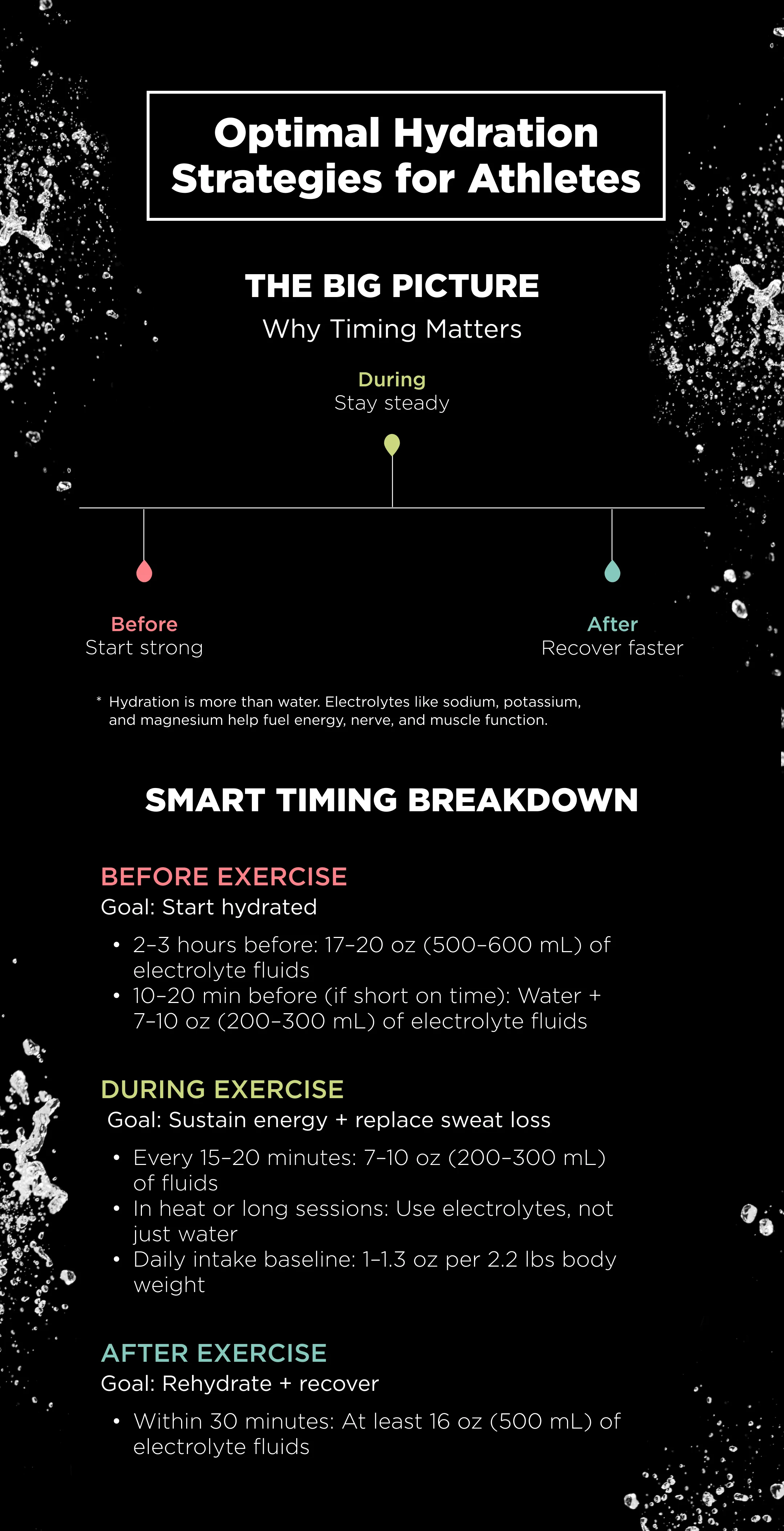
The Formula: Drink water with electrolytes 2–4 hours before training.
I suggest you get water and electrolytes into your system early enough that it's distributed where you need it.
My standard approach: Drink .08–.15 oz of water per pound of body weight 2–4 hours before training. For a 150-lb person, that’s 1.5–2.5 cups of water (or 11.5–23 oz). Aim for ~500–1,000 mg sodium per hour during heavy sweating. This can come from commercial electrolyte mixes, salted fluids, or food sources, and will help water get absorbed and distributed. This gives your body time to raise plasma volume and hydrate tissues.
Early morning workouts: If you don’t have hours of lead time, Dr. Israetel suggests drinking about 10 oz of electrolyte fluids 10–20 minutes before your workoutOpens in a new tab, and then another 7–10 oz of electrolyte fluids occasionally throughout the day.
Heat or heavy sweating: Increase the quantities. I typically suggest adding 1 extra LMNT stick and between 20–40 oz of extra water. My average client uses 2 LMNTs daily and may add extra when competing in a competition or increasing activity levels.
These are all guidelines, not rules. Hydration needs vary based on sweat rate, environment, training intensity, and individual physiology. Adjust your intake over time based on how you feel and perform.
Hydration During a WorkoutOpens in a new tab: Keeping the Signal Strong
As soon as you start training, you lose both water and electrolytes through sweat. In an hour of exercise, a moderately heavy sweater loses about 1–1.2 liters of fluidOpens in a new tab and a few hundred to over 1,000 mg of electrolytes per hourOpens in a new tab, depending on sweat rate, heat, acclimatization, and individual physiology.
Drinking pure water can dilute electrolytes further, weakening electrical signals. Muscle movements become slower, shakier, and less precise, and you risk slipping into junk volumeOpens in a new tab where reps feel harder but fail to stimulate progress.
During exercise, thirst isn’t a reliable signal that it’s time to drink. The sensation often lagsOpens in a new tab behind your needs, especially when you’re going hard. Many folks don’t feel parchedOpens in a new tab until beads of sweat are rolling.
A better signal: your phone’s timer. Plan out when to drink, and how much, and stick to that schedule, even if you don’t feel thirsty.
The Formula: Sip water and electrolytes throughout your session
For workouts under an hour or that don’t involve excessive sweating, plain water is enough for folks who regularly nail their hydration and sodium needs. Dr. Israetel recommends 7–10 ounces of fluid every 15–20 minutesOpens in a new tab. Add electrolytes (½ LMNT stick pack) if you’re training fasted.
For sessions that are over an hour, include intense intervals, or take place in the heat, aim for 16–20 ozOpens in a new tab of water with ½ – 1 LMNT stick pack per hour to help offset higher fluid and sodium losses.
For workouts lasting 60–90 minutes — recommendations are highly individual. Research shows wide variation in sweat and sodium losses, even among people doing the same workout in the same conditions. My rule of thumb is to drink 20–32 oz of water with ½–1 LMNT stick pack throughout my workout.
For super-long workouts (think: over 2–3 hours) or endurance events, cap your use at 2–3 LMNT stick packs a day, and get additional electrolytes from food sources like pickles and olives, suggests Robb Wolf, former research biochemist, 2X New York Times/Wall Street Journal bestselling author and LMNT co-founder.
As with pre-workout hydration, you might need to tweak these numbers based on the specifics of your workout and individual needs. For example, a higher fluid intake might make sense if you’re a heavy sweater, which you can figure out based on your individual sweat rateOpens in a new tab. To estimate it, weigh yourself before and after a workout, then account for what you drank (and don’t pee during your workout). The math is simple:
Sweat loss = (pre-workout weight – post-workout weight) + fluid consumed
Sweat rate = sweat loss ÷ hours trained
If you see salt streaks or residue on your shirt and skin after training, that's a pretty clear indicator that you're losing significant sodium.
After Training: Restore the System
After training, the purpose of hydration shifts to promoting recovery. You want to replace the fluids lost during trainingOpens in a new tab within two hoursOpens in a new tab. Restoring your blood plasma levels helps your body deliver nutrients, move oxygen, clear metabolic byproducts, and start repairing the tissues you just stressed.
Electrolytes enhance this processOpens in a new tab, especially if you finish your workout in a fluid deficit.Opens in a new tab Here’s how long it takes:
- Mild dehydration can be reversed within 45–60 minutesOpens in a new tab.
- Moderate hydration: 1–2 hours
- Severe dehydration: 3–6 hours or longer
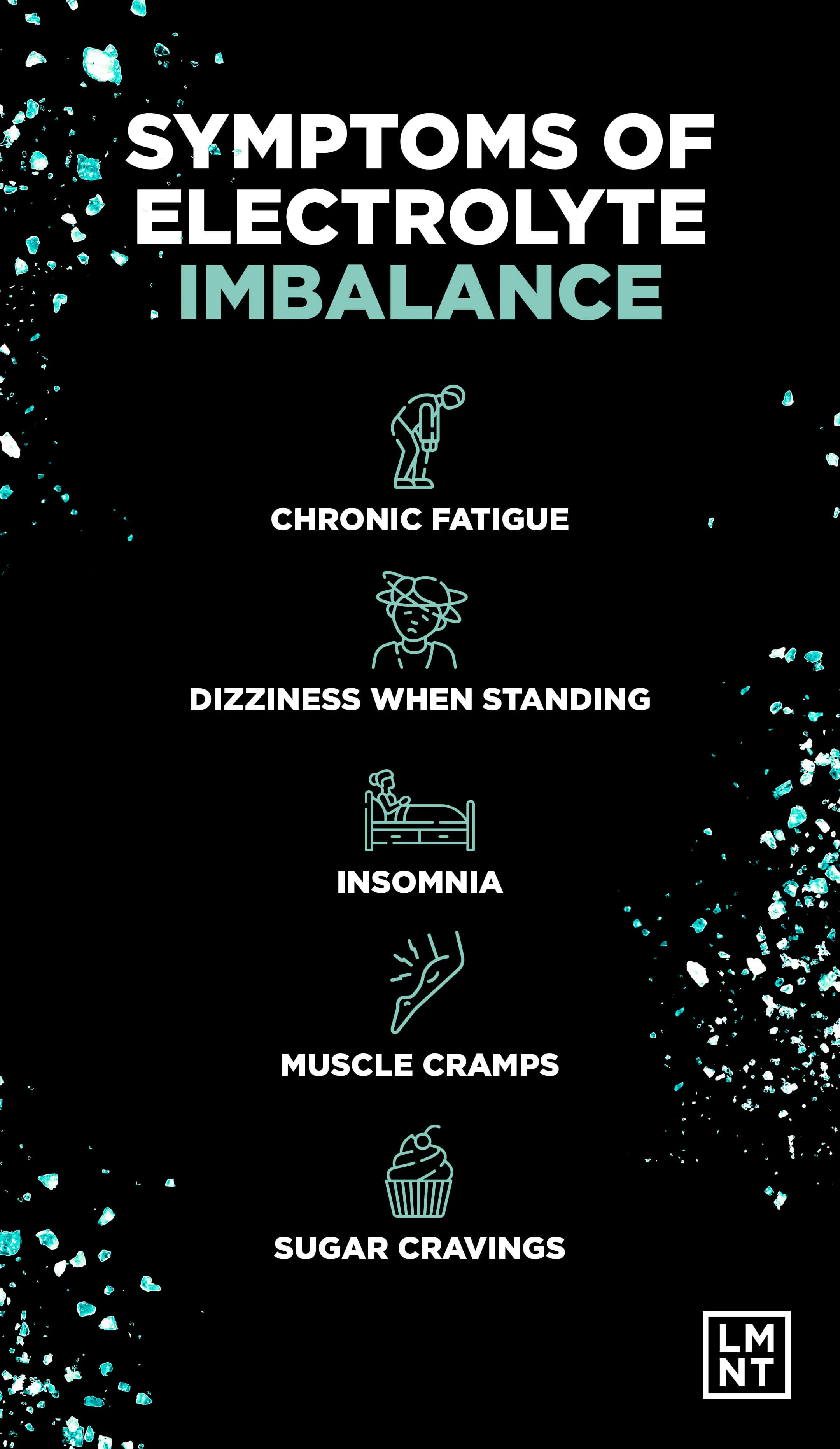
Sleep is the final piece. Your recovery depends on itOpens in a new tab, and electrolyte status plays a role here too. MagnesiumOpens in a new tab, in particular, may help your brain power down, reduce nighttime leg cramps that interrupt rest, and support circadian rhythm alignment — all factors that influence overnight recovery and next-day heart rate variability (HRV)Opens in a new tab.
The Formula: Replace fluids and electrolytes within 2 hours of finishing
If you have 12+ hours before your next workout: Simply replace what you lost. I drink 16 oz of water with electrolytes (1 LMNT stick pack) within 30 minutes of finishing, and continue hydrating normally throughout the day.
If you have 4 hours or less before your next workout: You need to restore plasma volume faster. Experts recommendOpens in a new tab replacing more fluid than you lost while exercising. If you want to get even more granular with the math:
- Weigh yourself before and after training
- Each pound lost = ~16 oz of fluid lost
- Multiply fluid loss by 1 to 1.5Opens in a new tab to get your target range
- Drink that amount (with electrolytes) over the next 4 hours
Example: Lost 1.5 lbs? That's 24 oz lost × 1.5 = ~36 oz to drink. Dissolve one LMNT stick pack in this amount and you should be golden.
This approach is most relevant after long-duration sessions, high-intensity workouts, training in heat, or any workout that produces noticeable sweat loss. For shorter or lower-intensity sessions with minimal sweating, aggressive rehydration is usually unnecessary.
The bottom line: If you're hydrating based on thirst, it’s likely you’ve already lost ground. Think ahead so you're not chasing performance when it comes time to grind.
FAQ
Q: How do I know if I’m under-hydrated before a workout?
Check your morning cues: dark yellow urine, a higher-than-usual resting heart rate, or feeling sluggish and unfocused are early signs.
Q: During my workout can I just drink water and add salt?
Yes but make sure you’re getting enough potassium and magnesium in your diet, too. A balanced mix keeps your muscles and nerves firing properly and prevents imbalances that can cause cramping or fatigue.
Q: What if I drink too much water during a workout?
Overhydration dilutes sodium in your blood — a condition called hyponatremiaOpens in a new tab. It’s rare during typical gym workouts but can occur during prolonged endurance events when large volumes of low-sodium fluid are consumed. Symptoms include dizziness, nausea, and fatigue. To prevent this, take small, consistent sips of electrolyte fluid instead of chugging fluids.
Q: What other nutrients are important for workout performance and recovery?
For athletes using carbohydrates for fuel, adding 30–60 grams per hour during longer workouts can help maintain blood sugar. Post-workout carbs and proteinOpens in a new tab support glycogen replenishment and muscle repair.
Fat-adapted athletes may not require intra-workout carbohydrates for lower-intensity or steady-state efforts. Focus on adequate protein (20–40g) after training and trust your fat metabolism to handle the energy demands. But high-intensity or glycolytic training may still benefit from carbohydrate availability.
Originally published January 2026; updated May 2026.