

Anyone can basically say anything they want on the internet with almost zero accountability. The problem is only worsening with the adoption of AI. More content can be created at scale than ever before and it's resulting in an onslaught of AI slop.
If you follow me on X, you may have seen me posting about accountability… and liability when an institution or influencer doesn’t check and challenge their own “facts” before publishing.
Not everyone is doing this intentionally. Folks who originally sought to have a positive impact on human health are often persuaded to prioritize speed and virality over rigor and nuance because that’s what the algorithms reward. By dictating the type of content that gets seen, these algorithms are essentially holding folks' livelihoods for ransom. It’s hard to beat them, easier to join them. And the offer is compelling:
Play the game. Get more widely distributed. Build a following. Get rewarded: advertising revenue, affiliate revenue, subscriptions, paid partnerships, and fame as millions of people start to take action on (mis)informed guidance.
Spreading alarm and fear are effective ways to build reach — fast.
Why fear pays
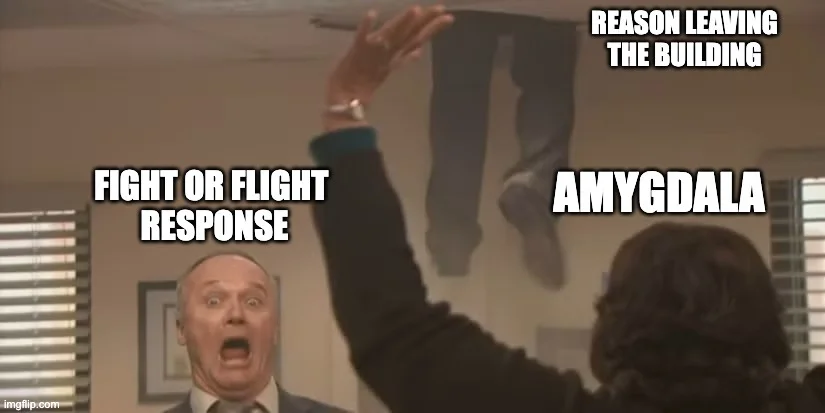
The human brain contains a powerful survival system whose primary goal is to keep you alive. Think of the fight or flight response that kicks on when you encounter a threat. Super helpful when the threat of a saber-toothed tiger loomed. Less helpful when the daily “threats” many of us now face are fear-inducing headlines.
This is the biological wiring that fear-mongering content preys on. And it works.
- A large analysisOpens in a new tab of fact-checked Twitter rumors found false stories spread 6x faster than truth.
- An analysisOpens in a new tab of nearly 100k news articles found that negative stories were 91% more likely to be shared on social media.
- Word choice matters, too. A studyOpens in a new tab of 563k social posts found that emotionally charged language — think “disgusting”, “betrayal”, “lying to you” — was shared 24% more often.
- That negative framing sticks. Heightened emotions are up to 47% more likelyOpens in a new tab to be remembered. Again, this biology is there for good reason. If something was dangerous enough to trigger a strong emotional response, remembering it could, theoretically, help you avoid danger next time.
There’s one more thing worth mentioning: Your brain craves certainty over ambiguity. It wants clear-cut answers to questions like “is this dangerous or safe?” “Good or bad?” “Right or wrong?” That creates fertile ground for another feature of fear-mongering content: swapping nuance for simplified, absolute answers.
Put those tendencies together — our attention to threats and our appetite for certainty — and you have a powerful formula for engagement.
The takeaway: Content packaged to create fear measurably changes what people click and share. And so the cycle of fear and profit is perpetuated.
The free speech and accountability mismatch
Trusting brands is key — and influencer reviewers are an important part of that discernment. That's part of a healthy marketplace of ideas.
But not all those with digital reach are equally rigorous or knowledgeable, and when you are running a business that profits from criticizing other businesses, that's commercial speechOpens in a new tab and it comes with financial liability. That's why you see more lawsuits popping up.
All too often, even if a redaction comes, the reach and impact are mismatched. The fear-maxxed falsehood generates 10MM views, the retraction 40k. That leaves 9 million 9 hundred and 60 thousand people who are misled, with the knock-on shareability factor of the fearful content.
Therein lies the core problem. The very “empowerment and accountability” content that creators purport to represent becomes the very thing they are degrading.
“Everything is poisoning you” may be a killer content strategy in terms of reach. But it’s actively harmful to health.
Turns out fear-maxxing isn’t good for your health
The survival response is an incredibly useful system when you’re actually in danger. It’s bad for your health when left running all day, every day.
- One studyOpens in a new tab found that the pursuit of “healthy” eating can become decidedly unhealthy, with food fears fueling restriction and contributing to malnutrition, emotional distress, health complications, and significant weight loss.
- Another studyOpens in a new tab found that folks with a social media addiction knew slightly more about healthy eating… but were 21% more self-critical about their weight.
It’s not a stretch then to realize that living in fear and worry may be undermining health more than the actual impact of consuming the things we are fearful of.
Turns out behaviors that begin as an attempt to protect health can ultimately undermine it.
Reclaiming your health sovereignty
A core piece of our mission at LMNT is helping you reclaim sovereignty over your health. That means developing enough understanding to ask better questions, weigh evidence, experiment intelligently, and make your own informed decisions. From a place of knowledge and empowerment, not fear.
I hope that bringing awareness to how the content machine is designed — to drive fear and virality — will help folks better navigate health information online.
Or, maybe we should all just spend a lot less time on the internet.