
Do athletes need more sodium?

Written by Jennifer Chesak (opens in a new tab)
Medically reviewed by Swapna Ghanta, MD (opens in a new tab) and Jared Meacham PhD., RD, CSCS (opens in a new tab)
Are you an active person? Then you’re an athlete. Does that mean you need more sodium? The short answer is most likely! How much do you need? The answer for that depends on some individual factors, including your diet, activity level, climate, and medical history. But we’ve got tools to help you figure it out.
My husband and I go to a nearby nature preserve to run regularly. We typically take different routes so we can each enjoy a little solitude in the woods and focus on our individual running goals.
The other day, our paths converged, and I found myself emerging from a side trail and trotting behind him on the main path for the last quarter mile. I slowed my pace a bit because droplets were streaming off him and flying in the breeze, almost as if he’d just stepped out of a lake. But then I looked down at my own body and realized I was also sending off a wild spray.
My point is that clearly we each lose a lot of sweat, especially while running in the furnace that is the South, and with the oodles of sweat, some electrolytes, including sodium, also get lost.
I’m well aware that I need to focus on sodium intake prior to (and sometimes during) a run and to replenish after sodium loss. I’ve landed on what works for me. But figuring out your individual sodium needs can get complicated.
That’s because sodium guidelines from health agenciesOpens in a new tab tend to put out the message that salt (sodium chloride) is bad for you and that you should limit your intake. However, these guidelines are over-generalized and don’t account for the nuances of activity levels, exercise intensity or duration, climate or weather, other aspects of diet, underlying conditions, and more.
So the big question is: Do athletes need more sodium? And the answer is: You betcha!
“When sodium’s too low, your endurance, strength, and mental sharpness all take a hit — not because you didn’t drink water, but because you didn’t get enough salt to hold onto that water,” says Luis VillaseñorOpens in a new tab, founder of KetogainsOpens in a new tab and co-founder of LMNT.
In this article, we’ll define “athlete” and offer guidance on how much sodium athletes need and how to figure out your individual requirements.
First Thing’s First: Who Counts As an Athlete?
I was in the hospital once and my blood pressure reading and resting heart rate were relatively low, so much so that the nurse taking my vitals asked if I was an athlete. I said, “Well, I run, like a lot.” She responded, “So, yes, you’re an athlete.”
I hadn’t thought of myself that way before, because in my head I pictured a professional out there qualifying for the Olympics or securing a spot in the elite coral at races.
“Let’s clear this up,” Villaseñor says. “You don’t need a sponsorship deal to call yourself an athlete. If you train consistently with a goal — whether that’s hitting a new squat PR, running your first 5K, or doing CrossFit three times a week — you’re an athlete.”
Okay, so I’m an athlete! But let’s talk about this in terms of activity level.
What counts as active? If you can check one or more of these boxes, you likely have sodium needs that go beyond that of the average person.
- Regular exercise: You engage in moderate to intense exercise on at least three to five days per week for 30 minutes or more each session (e.g., running, cycling, CrossFit, HIIT, weightliftingOpens in a new tab, team sports, martial arts, power yoga, etc.)
- Sweaty work conditions: Your job requires physical exertion or physical exertion in the heat (e.g., landscapers, chefs, first responders, and construction, factory, and warehouse workers, etc.)
- Heat or altitude exposure: You engage in physical activity while visiting or living in a warm climate or at high altitudeOpens in a new tab. Even moderate activity in these environments increases hydration and sodium needs.
- Endurance and high-volume training: You do extended workout sessionsOpens in a new tab or events or multiple training stints per day (e.g., ultra, marathon, or triathlon training, etc.).
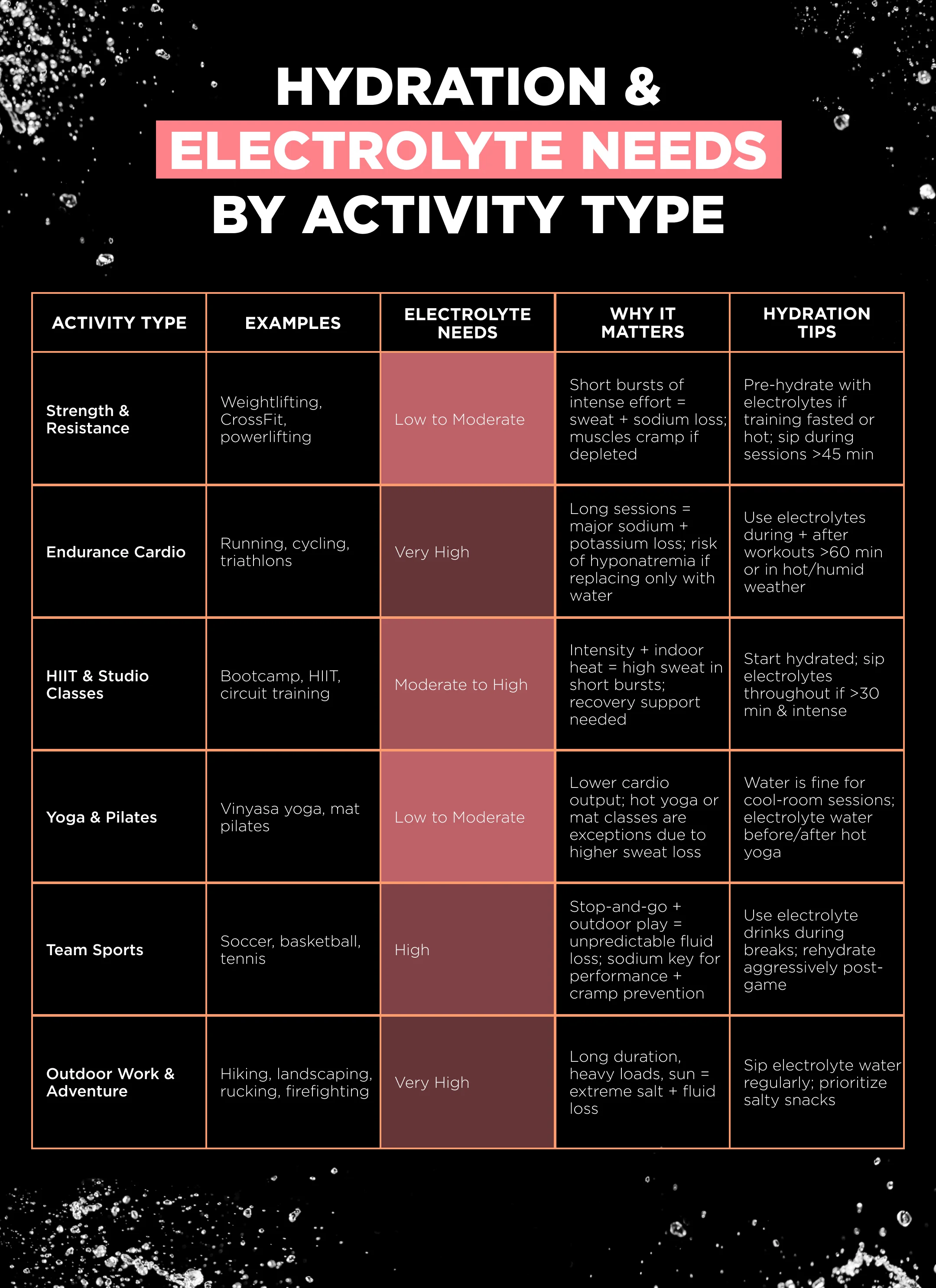
What does not count as active? Even if these less active factors apply to you, you may still benefit from electrolyte replacement, depending on your diet, underlying conditions, and more. However, these activities are unlikely to deplete your levels:
- Sedentary behavior or desk work
- Light stretching
- Walking in temperate conditions (Think: A short stroll or moving around the house.)
These activities don’t create enough sweat loss or elevated breathing/heart rate to meaningfully impact electrolyte balance. Keep in mind, though, that electrolyte depletion risk is less about type of activity and more about intensity, duration, and environment.
For example, let’s say you walk ~10 miles a day in New York City — climbing subway stairs, carrying bags, trudging through warm (even humid!) weather. That’s well past “light walking,” and electrolyte replacement can be beneficial if you notice signs of depletion like headaches, cramps, fatigue, or salt cravings.
Bottom line: If you finish the activity with sweat-soaked clothes, noticeable salt marks, or feeling drained — you’re in “active” territory for hydration and electrolyte needs.
Why Sodium Matters for Athletes
Now that we’ve defined athlete — and you’re probably thinking, “Hey! That’s me!”, let’s dive into sodium needs, starting with why they matter.
“When you sweat, sodium is the dominant electrolyteOpens in a new tab you lose,” Villaseñor says. If you lose too much during exercise, your performance will nosedive. And if you don’t replenish sodium post-training session, you can also impair your recovery.
First, a brief biochemistry lesson. Our cell membranes have an embedded protein called the sodium-potassium pump that helps manage fluid balanceOpens in a new tab and electrolytes.
We have a whole article on the sodium-potassium pumpOpens in a new tab, but in a nutshell, the pump ejects three sodium ions in exchange for two potassium ions. Think of it as a key facilitator of your body’s electrical activity, which powers several processes.
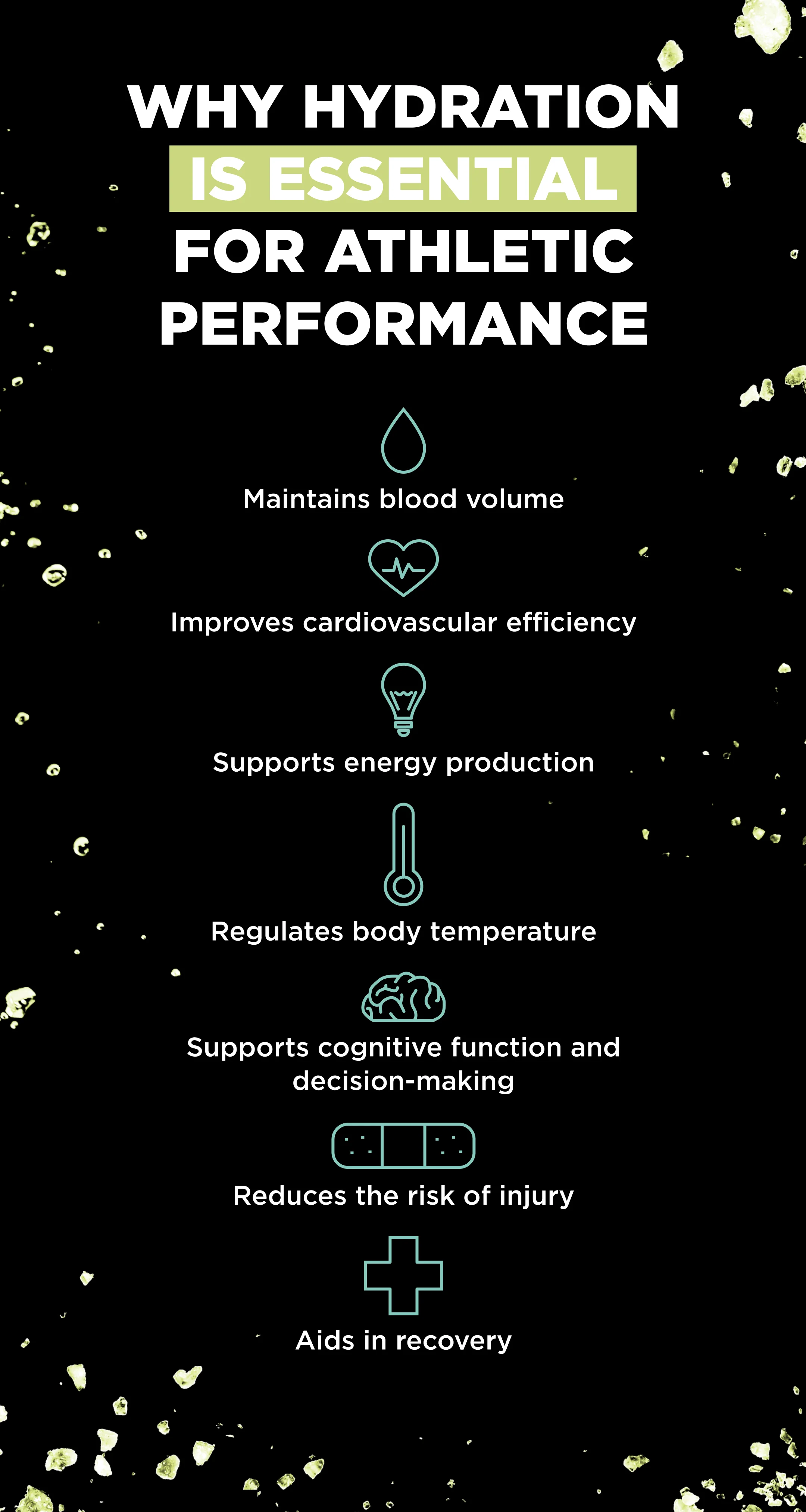
“It's critical for skeletal muscle contraction, cardiovascular function, nervous system function, hydration, fluid balance, brain health, cognitive function, immune health, nutrient absorption, proper fuel utilization, and more,” adds LMNT Partner Andy Galpin, PhDOpens in a new tab, a professor and director of human bioenergetics, the director of the Human Performance Center at Parker University.
This helps explain why maintaining an optimal sodium level is crucial for:
- Performance: “Lose enough without replenishing, and your blood volume drops,” Villaseñor says. “This can impairOpens in a new tab nutrient and oxygen delivery to your muscles, raise heart rate, and increase perceived exertion. In short, you feel like you’re working harder but performingOpens in a new tab worse.”
- Recovery: “Sodium helps drive fluid retentionOpens in a new tab in your blood and tissues. If you’re chronically under-salted, you’re more prone to muscle cramps, headaches, dizziness, and slower recovery of plasma volume post-workout,” he adds.
How Much Sodium Do Athletes Actually Need?
Much goes into determining your sodium needs. But you can use a few rules of thumb to help you dial in yours.
- General guidelines: Active people may need 3,500 to 7,000 milligramsOpens in a new tab of sodium per day depending on activity level, climate, diet, and more. To determine your personalized needs based on various factors, you can use LMNT’s Sodium Intake CalculatorOpens in a new tab.
- Comparison to the general population: Sodium guidelinesOpens in a new tab from government or other health agencies tend to be over-generalized for the average individual. They do not account for the factors mentioned above, and they acknowledge this in their reports.
- Sweat sodium loss: Sweat rate varies per person and activity and at different weather conditions. You can approximateOpens in a new tab your sweat rate for a specific activity in your climate by weighing yourself (clothes off) before and after a workout — accounting for urination or fluid consumption during your post-exercise weigh-in. For more precise guidance, you might use an online calculator as a reference point or consult a professional who can measure sweat rate directly. Villaseñor offers his “Luis’ Rule of Thumb”: “For every pound lost, you’ve dropped about 16 ounces of water and about 500 to 1,000 milligrams of sodium. Replace both — fluids and electrolytes — accordingly.”
When Athletes Need More Sodium
Athletes tend to need more sodium, but those needs will vary based on additional factors beyond physical activity.
Diet
“Folks who eat very low amounts of processed foods and are highly active are likely too low in sodium,” Dr. Galpin says. “This is true even if you salt your food while cooking or at the table.”
For the average person, about 70% of sodiumOpens in a new tab comes from manufactured and processed foods. Other estimated contributors include sodium naturally present in food (15%), salt added at home during cooking (6%), and salt added at the table (5%).
Low-carbohydrate diets also tend to increase sodium loss through urine because these diets lower insulin levelsOpens in a new tab, which can then reduce how much the kidneys re-absorb sodiumOpens in a new tab.
Climate
You will sweat more, and therefore lose more sodiumOpens in a new tab, when you’re outdoors or in a non-air-conditioned indoor environment in a warm region.
A warm climate can also make you reach more for your water bottle. However, if you’re drinking plain waterOpens in a new tab, you are diluting your sodium level and may need to increase your intake of this electrolyte.
A note on acclimatizationOpens in a new tab: “You sweat more efficiently in new climates over time but lose more sodium early on,” Villaseñor says. Most people take about two weeksOpens in a new tab to acclimatize, so you may have even higher sodium needs early on.
You may notice that you sweat more as time goes by in the same conditions, but your body will learn to conserve more sodium during perspiration as you adapt.
Underlying conditions
Some underlying conditions — such as adrenal insufficiency and Addison’s diseaseOpens in a new tab, Bartter syndromeOpens in a new tab, cystic fibrosisOpens in a new tab, post-orthostatic tachycardia syndrome (POTS)Opens in a new tab, to name a few — may boost your sodium needsOpens in a new tab. If you have an underlying condition or take medications, consult your doctor for individualized sodium recommendations.
Symptoms
If you are experiencing symptoms of low sodium (hyponatremia)Opens in a new tab, consider them a major clue that you aren’t getting enough. Seek medical attention for severe symptoms, including:
- Nausea or vomiting
- Widespread involuntary muscle jerks or spasms
- Intense or worsening headache and light sensitivity
- Cognitive issues (such as confusion, brain fog, speech impairment)
- Loss of consciousness
- Seizures
- Difficult with balance or coordination
Sodium Intake Timing for Performance
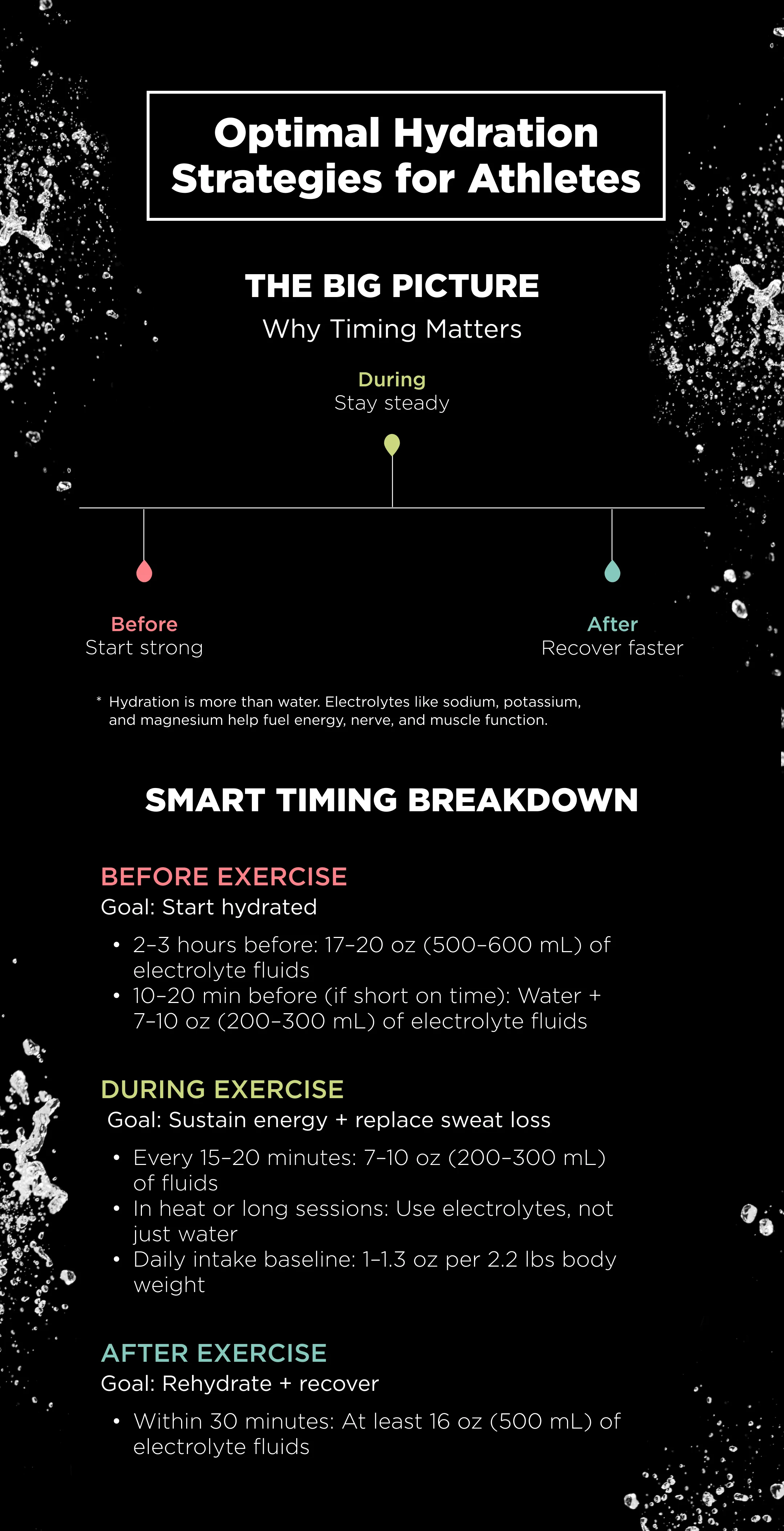
Strategies for ensuring hydration and optimal sodium levels, especially around training are highly personal and individualized. Ultimately, there’s a good chance you may need to consume some sodium before, during, and after a workout.
I’ve included my strategies below for optimizing sodium intake with LMNT (that’s what I use), but you will need to find what works best for you based on what time of day you train, what you eat, and more.
- Before: Sodium intake pre-workout helps improve hydration statusOpens in a new tab and blood volume by helping you hold onto water. (I tend to drop an LMNT stick pack into my water bottle in the morning in prep for my early evening run or lifting session.)
- During: During prolonged exercise (60 minutes or more), sodium helps keep your levels up to aid performanceOpens in a new tab. (I add an LMNT stick pack to the water bottle I carry on longer runs and sip it throughout my workout.)
- After: Replenishing sodium loss after exercise is crucial for overall health and your recoveryOpens in a new tab. (I typically add a half or whole stick pack to my water bottle and sip throughout the evening, especially if I had a hot or lengthy exercise session.)
Timing matters — but so does total intake. Be mindful of how many grams you need and how much you’re getting on active days. The goal is balance, not overload.
Myth-Busting: Isn’t Too Much Salt Dangerous?
The topic of sodium comes with a hefty side of myths. So let’s bust ’em.
Myth 1: “Sodium is bad for you.”
The truth: Sodium is crucial for your body. You need a minimum amount to even survive. And athletesOpens in a new tab may not be getting enough sodium through diet.
“Context matters!” Villaseñor says. “Excess sodium is only an issue when paired with a crap diet (ultra-processed foods) and poor metabolic health. Whole-food eating, active people almost always need more salt, not less.”
Myth 2: “You should lower your sodium intake.”
The truth: Sodium needs are highly individual. Sodium guidelines advocate for lowering sodium because the average individual may be getting too much from ultra-processed foodsOpens in a new tab and experiencing negative health consequences from those foods.
However, these guidelines don’t account for the individual nature of sodium needs, including for athletes on healthy diets, and those who are active at high heat or high altitude. In these cases, you may not be getting enough sodium.
Myth 3: “If you have clear or light-yellow pee, you’re hydrated.”
The truth: Urine colorOpens in a new tab (and appearance) is a delayed and unreliable indicator of hydration status. And it does not correlate wellOpens in a new tab to how much sodium you’ve lost. Likewise, many factors impact urine color, including bile pigment, like bilirubin, which come from red blood cell breakdown — not hydration status.
Myth 4: “Salt increases blood pressure and hurts cardiovascular performance.”
The truth: Research has associated excess salt intake with elevated blood pressureOpens in a new tab. However, that doesn’t tell the whole story. The key here is the word “excessOpens in a new tab.” Sodium is essential for fluid balance and cellular health. Remember that athletes and active people tend to need more sodium than sedentary individuals, especially if they aren’t consuming ultra-processed foods.
Real Risks of Too Little Sodium for Athletes
A serious risk of low sodium levels is hyponatremiaOpens in a new tab, which can causeOpens in a new tab confusion, seizures, and even coma in severe cases.
Hyponatremia means the body does not have enough sodium in relation to the amount of water. It occurs when sodium levels fall below the normal range of 135 to 145 milliequivalents per liter (mEq/L).
In serious but rare cases, hyponatremia can also lead to rhabdomyolysisOpens in a new tab. This is a conditionOpens in a new tab in which skeletal muscle breaks down and leaks into extracellular fluid and the bloodstream. A telltale symptom is rust-colored urine.
Additionally, your performance can plummet when your sodium level drops, because sodium plays crucial roles in nerve signaling and muscle functioningOpens in a new tab.
Key Takeaways
- Do athletes need more sodium? Yes is the short answer, especially for longer work or workout sessions and those at high altitude or heat.
- Low sodium levels can lead to performance deficits, negatively impact recovery, and even cause serious symptoms.
- Sodium guidelines from health agencies advocate for reductions in sodium, but these guidelines don’t account for individual differences, such as for athletes.
- You can estimate your sodium needs based on various factors using LMNT’s Sodium Intake CalculatorOpens in a new tab as a general guide.
FAQ
Do you need more salt if you exercise more?
Yes, active people need more sodium. This is especially true if they work or work out in high-heat or high-altitude conditions, consume a low-carb or whole-foods diet, or have certain underlying conditions.
Should athletes add salt to food?
Adding salt to your food is a matter of taste. Salt added during home cooking or when eating contributes only about 11% of total sodium intake. Athletes may benefit from an extra boost of sodium and electrolytes to support physical exertion.
Do athletes crave more salt?
Salt cravings are highly individualOpens in a new tab, but you might crave more salt as an athlete, especially if your sodium levels are on the lower end.
How much sodium do you need if you're active?
How much salt you need is highly individual and based on various factors. You can estimate your sodium needs based on various factors using LMNT’s Sodium Intake CalculatorOpens in a new tab as a general guide.
Is sodium bad for athletes?
Sodium is crucial for everyone to survive. Athletes often need more sodium than sedentary individuals because of sodium losses through sweat and other factors.