

5 simple habits that may improve your health (and the science behind them)

Written by Julie Stewart (opens in a new tab)
Medically reviewed by Ecler Ercole Jaqua, MD, MBA, DABOM (opens in a new tab)
Key points:
- Small, repeatable behaviors are more likely to stick and create lasting health improvements than complex routines.
- When a behavior fits naturally into your day, you’re far more likely to maintain it.
- Basics like sleep, light exposure, hydration, and attention management have outsize effects relative to effort.
We have more health information and tools than any generation in history. And yet many of us go through the day tired, distracted, and feeling vaguely behind.
Chris WilliamsonOpens in a new tab, host of the Modern Wisdom podcast, has been there. Once a self-described “obsessive productivity bro,” he’s spent the last eight years interviewing some of the smartest people on the planet about productivity, health, and self-improvement. The common thread to his conversations: Meaningful health shifts often come from reducing friction around simple habits, not elaborate routines.
Former research biochemist, bestselling author of Wired To Eat, and LMNT co-founder Robb Wolf agrees. “The habits that drive the most meaningful change don't have to weigh on you. They shouldn't feel like a chore, or something you have to earn the right to,” says Wolf. “When something fits your life instead of interrupting it, you actually do it. And the compounding effect of actually doing it is where results live.”
Why Simple Habits Stick
Simple habits are more likely to stick than those requiring more planning and brainpower according to one meta-analysisOpens in a new tab. This is certainly true when it comes to health:
- One 2025 meta-analysisOpens in a new tab found that sedentary adults who break up the day with short bursts of vigorous movement like stair climbing or short cycling intervals saw improved fitness over several weeks to months. In some of the studies, this movement was also associated with lower low-density lipoprotein (LDL) cholesterol.
- A randomized trialOpens in a new tab found adults with metabolic syndrome who implemented small, repeatable habits — eating vegetables at meals, taking brisk walks, and pausing before reacting to stress or eating — were more likely to see improvements in metabolic syndrome markers than people who only received health education and an activity monitor.
The mechanisms seem to be automaticity and simplicity: Habits that don't require willpower are easier to repeat, and behaviors that repeat frequently are the ones more likely to shift metabolism, sleep, and energy levels over time.
It’s tempting to dismiss obvious advice like “eat more vegetables” as too simple to make a big difference. But the fundamentals keep resurfacing for a reason: They work.
Here are five high-impact habits you’ve likely heard of — but maybe don’t do — that Williamson and Wolf swear by.
Sleep with your phone outside of your bedroom
“It’s the single cheapest, completely free lifestyle intervention that will instantly improve the quality of your life,” says Williamson.
Most people still sleep with the most stimulating device ever created within arm’s reachOpens in a new tab: 83% of middle-aged people keep their smartphones in the bedroom and 43% always or often check them within 10 minutes of falling asleep.
Phone use within 30 minutes of sleep is linked withOpens in a new tab delayed bedtimes, shortened sleep, and daytime drowsiness. Screen light — especially bright or prolonged exposure — can suppress melatoninOpens in a new tab, the hormone that signals it’s time to sleep.
Need help kicking your phone out of your bedroom? “Get a screen time app,” says Williamson. “From 7 a.m. till 8 p.m. you can use your phone, and then from 8 p.m. to 7 a.m., you can’t.” Think of it as intermittent fasting for your phone use.
Start the day with sun and movement
“My morning routine is to get up and walk. Fifteen minutes of sunlight in my eyes,” Williamson says. This strategy is shared by experts he’s interviewed, most notably neuroscientist Dr. Andrew HubermanOpens in a new tab, who suggests getting 5-10 minutes of morning sun on bright days and 15-20 minutes on overcast ones. ResearchOpens in a new tab links sun exposure before 10 a.m. with better sleep quality and more restorative sleep the next night.
Morning light also:
- Helps regulate your cortisol awakening responseOpens in a new tab — different from stress-driven cortisol spikes — which is associated with alertness in the early part of the day.
- Anchors circadian rhythmsOpens in a new tab — the internal clocks that regulate sleepiness and alertness — by suppressing melatonin.
If you take a stroll while soaking in the sun, you also lock in some movement. Even if you don’t get the recommended 7,000 stepsOpens in a new tab, you’ve already done something that nudges your physiology in the right direction.
Use hydration as a force multiplier
"If I'm not sufficiently hydrated, my brain doesn't work well,” says Williamson.
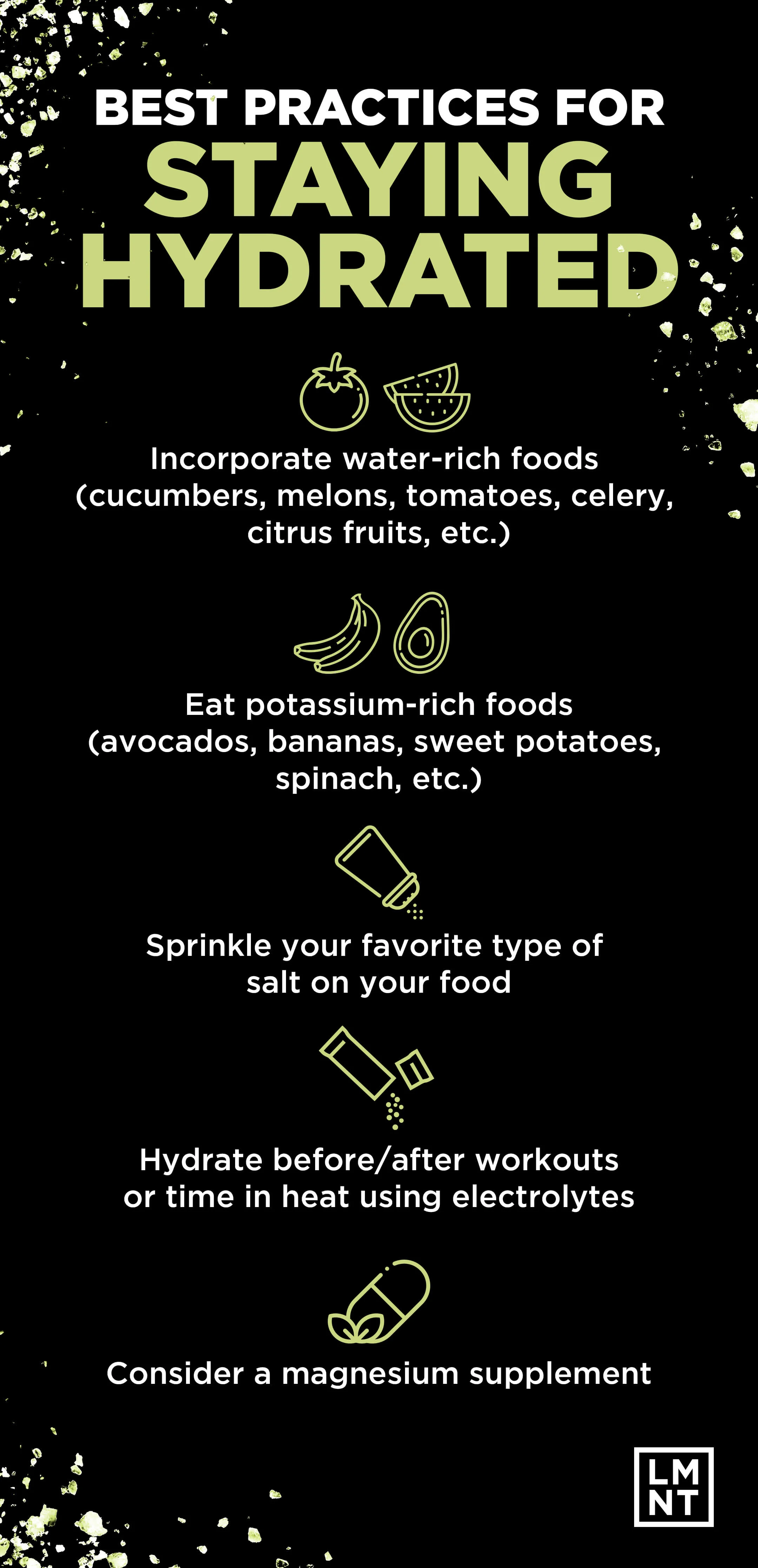
Staying hydratedOpens in a new tab is crucial for energy, mental clarity, and mood support. Your brain runs on water and electrolytesOpens in a new tab. When you’re dehydrated, your hypothalamus increases production of the hormone vasopressin, a hormone that helps regulate the body’s water balance by signaling the kidneys to conserve water. That signal may be associated with increases in stress hormones like cortisolOpens in a new tab. Your brainOpens in a new tab measurably (but temporarily) shrinks to maintain fluid balance in the body. Neural activityOpens in a new tab becomes less efficient, meaning your brain has to work harder to maintain the same level of performance.
Even mild dehydration can sap your ability to sustain attention, researchOpens in a new tab suggests. That’s a problem when you’re trying to form new habits because executive functionOpens in a new tab, which involves attention, memory, and suppressing inhibition, is a driver of healthy behavior.
Mild to moderate dehydration of 1.5 percent to 3 percent loss in body mass also makes exercise feel significantly harder, according to a review in the Journal of Exercise Science & FitnessOpens in a new tab. Dehydration increases the rate of perceived exertion (RPE), making workouts feel harder than they otherwise would, which can lead to junk volumeOpens in a new tab.
In some cases, water alone doesn’t solve the problem. “Proper hydration isn't just about having sufficient fluids in your body,” says Williamson, who uses LMNT in the morning and during podcast recordings. “It's having the electrolytes to allow your body to actually use the water that you consume."
Schedule phone-free breaks throughout the day
When your phone is always nearby, your nervous system rarely gets a break. ResearchOpens in a new tab suggests that constant notifications keep us in a state of anticipation for the next dopamine hit from a text, comment, or headline. And the mere presence of a phoneOpens in a new tab can distract us from the benefits of in-person social interactions.
ResearchOpens in a new tab also shows that frequent phone use is associated with higher rates of depression, stress, anxiety, and sleep problems. It becomes a vicious cycle – problematic phone use contributes to mental health problems, and then people get more addicted to their phones as they use them in search of a quick mood boost.
Cutting back on smartphone time can reduce stressOpens in a new tab, steady your mood, and boost energyOpens in a new tab, not to mention tame the mental fatigue that comes from having too many things percolating in your mind.
Even better? “Rather than scheduling breaks, I often delete social media from my phone,” says Wolf.
Eat dinner earlier to sleep better
"Eating a good while before bed definitely seems to make me sleep better, so I'm pushing dinnertime earlier and earlier,” says Williamson.
If you’re working late or shuttling kids between activities, dinner can drift later than you’d like. But eating too close to bedtimeOpens in a new tab may reduce sleep quality in a few ways:
- Circadian disruptionOpens in a new tab: Meal timing acts as a cue for our biological clocks Opens in a new tabthat regulate sleep. We’re wired to feed during the day and fast at night.
- Blood sugar elevation: Eating close to bedtime can keep blood sugar elevatedOpens in a new tab when your body is preparing for rest.
- Hormone shifts: Late meals also nudge hormonesOpens in a new tab like cortisol and melatonin out of their usual rhythm.
- Body temperature changes: Eating two to three hours before bed may also lead to a slight elevation in body temperature that could disrupt sleep, preliminary researchOpens in a new tab suggests.
Over time, that can add up, with some studiesOpens in a new tab suggesting late eating is associated with markers of inflammation and mood disturbance.
“Meal timing should be whatever optimizes your sleep,” says Wolf. “That could mean a light, pre-bed snack, or it might mean a good 3-4 hrs between dinner and bedtime.” This is one of those places where you have to find what works for you — and your sleep quality is the feedback.
The takeaway
These strategies won’t win awards for novelty. They work because they align with basic physiology and remove unnecessary friction. In a culture obsessed with increasingly complex health hacks, there’s real power in simplicity. When sleep, light, hydration, meal timing, and attention are dialed in, everything built on top of them gets easier to sustain.
FAQs:
Q: Does eating late at night affect sleep?
It can. A studyOpens in a new tab of 793 young adults found that eating within three hours of bedtime was associated with more nighttime awakenings. A larger population-based studyOpens in a new tab found even stronger effects — eating within one hour of bedtime more than doubled the odds of waking after sleep onset. A good starting point: aim for 3 hours between your last meal and bed, then adjust based on how you sleep. It can take a little experimenting to find what’s right for you.
Q: Can dehydration cause brain fog?
Yes, and it doesn't take much. A meta-analysisOpens in a new tab of 33 studies found that dehydration impairs attention, executive function, and motor coordination. Fluid losses as small as 1–2% of body weightOpens in a new tab can impair focus and working memory, and contribute to anxiety and tension.
Q: How long should I spend in morning sunlight?
Aim for 10 to 30 minutes of outdoor light within the first few hours of waking. A 2025 studyOpens in a new tab of over 1,700 adults found that every 30-minute increment of morning sun exposure was associated with improved sleep quality. The mechanism: Morning light sets your circadian clock, triggering a countdown to melatonin release roughly 12-16 hours later. Earlier light exposure means earlier, more predictable melatonin onset — and better sleep.