
How caffeine influences physical performance

Written by Robb Wolf (opens in a new tab)
Medically reviewed by Ecler Ercole Jaqua, MD, MBA, DABOM (opens in a new tab)
Key takeaways:
- Caffeine is one of the most effective performance enhancers we have. Dozens of studies show benefits across endurance, strength, power, and repeated-effort sports.
- Endurance gets the biggest boost. Caffeine lowers rate of perceived exertion by about 6% and improves endurance time-trial performance by about 3% — enough to shave nearly a minute off a 30-minute cycling effort.
- Strength and power benefits show up at surprisingly low doses. In one study, as little as 76 mg (for a 185-pound person) improved one-rep max and muscular endurance.
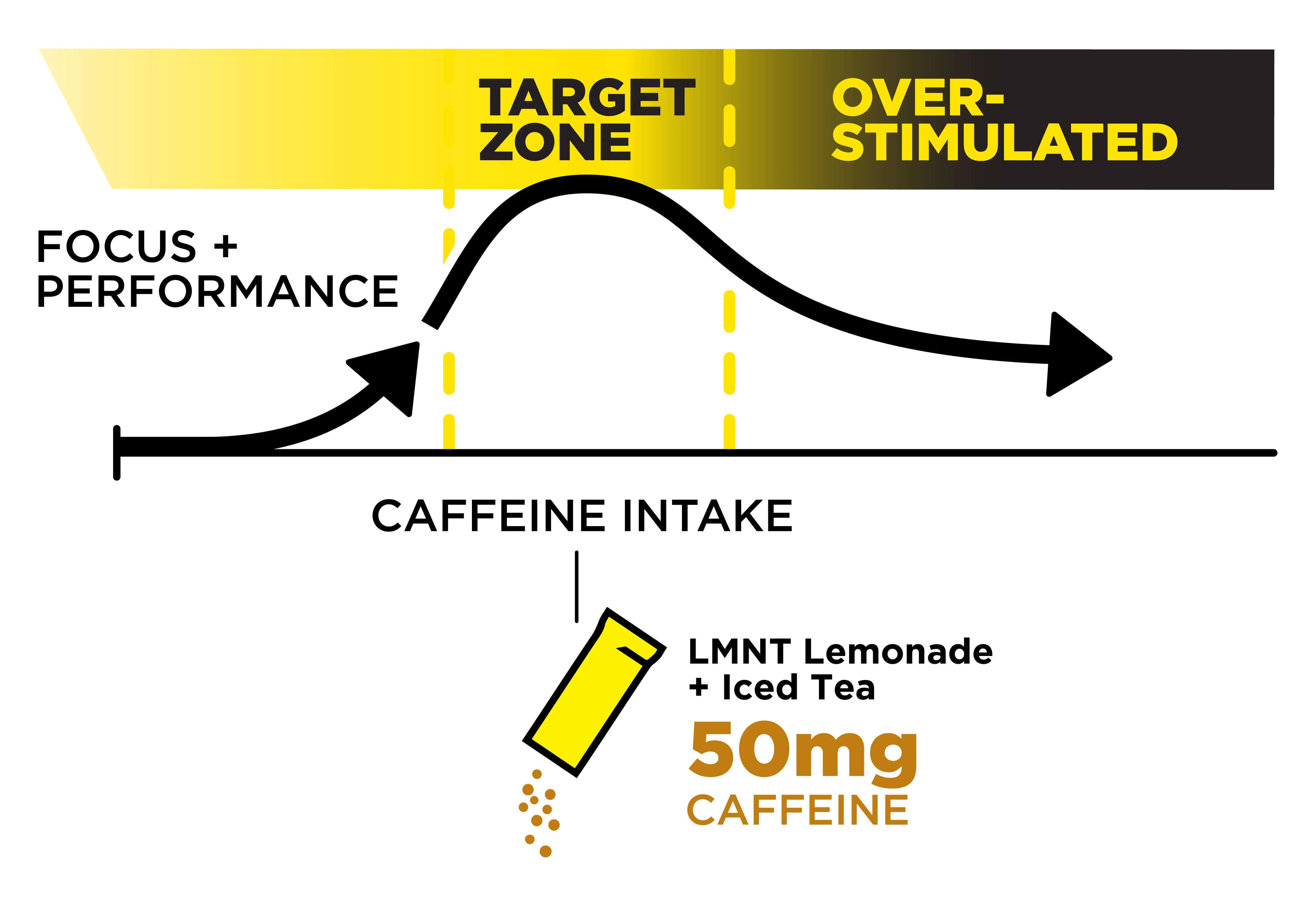
- Dosing matters more than most people realize. For most workouts, 50 mg taken 15 minutes before you start lands peak effects mid-session — exactly when you want them. For multi-hour endurance events, smaller doses every 60 to 90 minutes beat a single front-loaded hit. For afternoon workouts, keep it low (25–50 mg) to protect your sleep.
Caffeine is one of the most reliable supplementsOpens in a new tab we have for improving endurance, strength and power, and high-intensity output, and like 75% of competitive athletesOpens in a new tab, I’ve used it as a performance enhancing compound. If I’m dragging in the afternoon for example, a quarter of a cup of coffee or an LMNT Lemonade Iced TeaOpens in a new tab before my workout puts a little spring in my step to get me through.
Understanding how caffeine enhances performance can help you use it strategically, whether you’re grinding through long miles, chasing a deadlift PR, or pushing repeated bursts of effort in a team event.
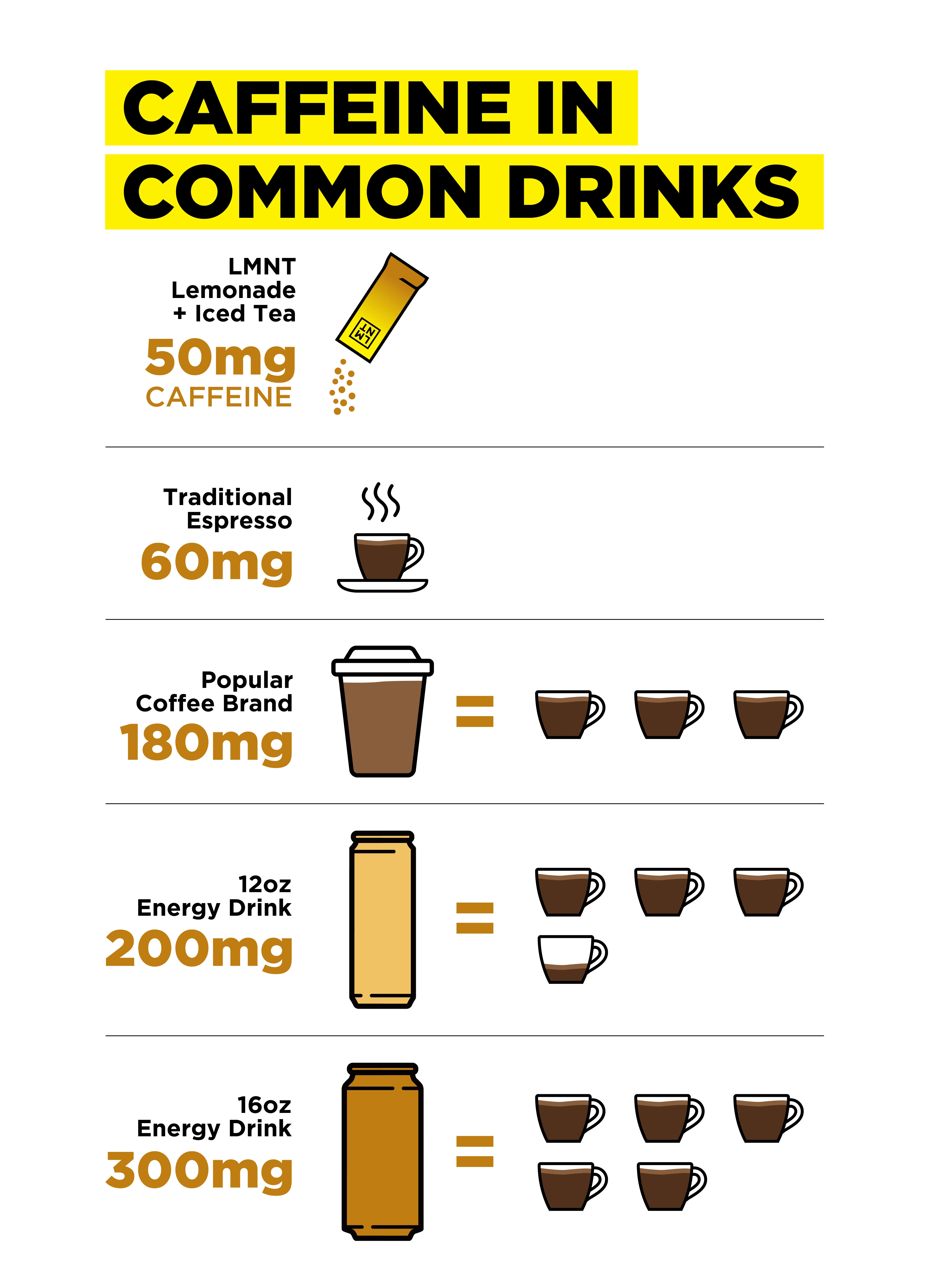
One caveat worth flagging before we get into the research: Many of the studiesOpens in a new tab on caffeine and athletic performance that I’m sharing use doses of 3 to 6 mg per kilogram of body weight, which for a 185-pound person works out to 252 to 504 mg. From two decades of coaching — from special forces to do-it-all parents — I’ve seen that 50 mg of caffeine per serving is plenty for even the hardest chargers.
Caffeine and Endurance
Caffeine’s strongest benefits show up in endurance or aerobic exerciseOpens in a new tab like running or cycling, where large muscle groups sustain a rhythmic effort over time and fatigue accumulates gradually.
DozensOpens in a new tab of studies show that caffeine delays fatigueOpens in a new tab signals, iOpens in a new tabncreases time to exhaustionOpens in a new tab, and lowers your rate of perceived exertion or effort (RPE)Opens in a new tab.
One meta-analysisOpens in a new tab found caffeine improved endurance time-trial performance — a measure of how quickly an athlete can cover a set distance at max effort — by about 3% compared to a placebo. That could look like shaving almost a minute off a cycling session that normally takes you 30 minutes. At the elite level, where races are often decided by margins well under 1%Opens in a new tab, that’s a real advantage.
Another meta-analysisOpens in a new tab found caffeine can lower the rate of perceived exertion (RPE) by about 6% during steady-state exercise. So if running at a decent clip would normally put you at a 7 out of 10 on the exertion scale, caffeine can bring that down to a 5, allowing you to sustain your overall effort longer.
The mechanismOpens in a new tab traces back to caffeine’s ability to block adenosine receptorsOpens in a new tab (I talk about this in depth in “How caffeine works”):
- Adenosine is a chemical that builds up the longer you’re awake, especially with increased physical activity and mental effortOpens in a new tab.
- When it binds to receptors in the brain, it slows neuronal firing and neurotransmitter release, promoting drowsiness and fatigueOpens in a new tab. In peripheral tissues like muscle, adenosine can accumulate during exercise, bind to receptors on sensory nerve endings, and contribute to exercise-induced painOpens in a new tab.
- Caffeine structurally mimicsOpens in a new tab adenosine and occupies those same receptors.
- With adenosine blocked, fatigueOpens in a new tab and pain signalsOpens in a new tab are delayed, and neuronal firing ramps up. Neurotransmitters like dopamine and norepinephrine flow more freely, boosting alertness, motivation, and coordinated movement.Opens in a new tab
- The net result: Effort feels lower at the same intensity.
Separate from its effects on adenosine, caffeine may also increase beta-endorphinsOpens in a new tab — feel-good, pain-blunting chemicals — further reducing perceived exertion.
Individual variability is real here. How much of a boost you get from a given pre-workout dose of caffeine may depend on how much you usually consume. The research isn't unanimousOpens in a new tab, but some studies suggest higher habitual intake may lead to less pronounced benefits.
The likely explanation: Chronic caffeine use may increase the number of adenosine receptorsOpens in a new tab in the brain. More receptors to block means you need a larger dose of caffeine to achieve the same perceived effect — but the bigger the dose, the harder the landingOpens in a new tab.
Caffeine’s Impacts on Strength, Power, and Explosive Performance
Caffeine delivers measurable gains in the weight room, during high-intensity interval training (HIIT), and in team sports. The right dose for you — at the right time — can improve:
- Maximal strength: the most weight you can move in a single rep, which reflects the greatest force your muscles can produce
- Peak power: how fast you can apply that force — crucial for explosive movements
- Muscular endurance: the ability to sustain repeated muscular contractions against resistance.
Again, these effects trace back to caffeine’s ability to block adenosine receptorsOpens in a new tab. In addition to curbing fatigue, reducing pain, and boosting motivation, this blockade increases the activity of motor neuronsOpens in a new tab in the brain and spinal cord that control muscle movement.
Stronger signaling between motor neurons and muscles boosts the recruitment and firing rateOpens in a new tab of motor unitsOpens in a new tab (each motor unit is a neuron and the muscle fibers it controls.) With more motor units active — and firing faster — muscles generate more force quicklyOpens in a new tab, and you move more efficiently.
Max strength and muscular endurance (the weight room)
Caffeine can modestly make resistance training feel easierOpens in a new tab. Studies show it improves both strength ( your one-rep max, or the most weight you can lift in a single squat, deadlift, or bench press) and muscular endurance (how many reps you can perform before fatigue sets in)
You don’t need massive doses to see benefits. In one studyOpens in a new tab, as little as 76 to 168 mg (for a 185-pound person) was effective.
These effects hold across upper-Opens in a new tab and lower-bodyOpens in a new tab movement, though some research suggests caffeine may be a bit more effectiveOpens in a new tab for enhancing strengthOpens in a new tab in larger, lower-body muscle groups.
Both low- and high-habitual caffeine users see these benefitsOpens in a new tab. ToleranceOpens in a new tab may blunt these effectsOpens in a new tab to an extent, but doesn't eliminate them.
Explosive power and speed (short-burst athletes)
Caffeine shines in sports that demand short bursts of all-out effort — sprinting, jumping, lifting, throwing, gymnastics.
The benefits show up most clearly in muscular power versus max strength. Specifically caffeine improves movement velocityOpens in a new tab (how fast you move a load) and power output (a function of load and velocity combined).
A recent meta-analysisOpens in a new tab found that caffeine improves barbell speed and average power output in lifts like bench presses and back squats across a wide range of loads — especially for lower-body movements and in people with low-to-moderate habitual caffeine intake.
It also boostsOpens in a new tab peak power output and repeated sprint ability (RSA) — your capacity to perform multiple consecutive high-intensity sprints with minimal recovery — in both cycling and running.
Repeated high-intensity efforts (team & court sports)
Caffeine is useful in sports defined by repeated bursts of high-intensity effort — the intermittent sprinting, hard cuts, jumping, and explosive contact that characterize a 1 to 2 hour tennis, soccer, rugby, basketball, or combat sports match.
A 2024 meta-analysisOpens in a new tab found that pre-exercise caffeine helped athletes perform more high-intensity actions — and succeed more often — during competition. In one of the included studies, soccer players who consumed 3 mg/kg of caffeine (252 mg for a 185-pound athlete) before a match completed an average of 30 sprints versus 24 in the placebo group — a meaningful gap at match intensity.
This benefit may even extend beyond sports to physically demanding jobs like firefightingOpens in a new tab or construction that require endurance plus repeated bursts of effort, but more research is needed.
Caffeine and Cognitive-Motor Performance
Caffeine may sharpen cognitive-motor performance — how well your brain and body work together to respond to what's happening in your environment.
One meta-analysisOpens in a new tab found that 3-6 mg/kg caffeine about 60 minutes before exercise improved reaction time and agility in sports like soccer, taekwondo, and volleyball. Individual studiesOpens in a new tab also show better fine motor control and passing accuracy in soccer players.
Mechanism-wise, we're back to adenosine blockade. With those receptors occupied by caffeine, dopamine activity ramps upOpens in a new tab — and you get the downstream benefits: sharper alertness, faster mental processing, better coordinated movement. Motor units also fire faster, so your muscles respond quicker. In any sport where split-second decisions decide the outcome, that's a real edge.
Caffeine Dosing and Timing: Short vs. Long Workouts
Most studies test the effect of a single moderate-to-large dose of caffeine taken 60 minutes before exerciseOpens in a new tab. But in the real world, ideal timing and dosing should be based on workout duration, along with your personal caffeine metabolism and toleranceOpens in a new tab.
For most workouts
50 to 100 mgOpens in a new tab taken about 15 minutes before you start is enough to get the benefits without the jitters. "Caffeine's effects start to kick in about 15 minutes after you ingest it, then build to a peak around 60 minutes before slowly coming back down over several hoursOpens in a new tab," says endurance coach, ultramarathoner, podcaster, and LMNT Partner Zach BitterOpens in a new tab — meaning peak effects land mid-workout, which is exactly when you want them.
If you typically workout in the afternoon, stick to lower doses. I usually cap it at about 25–50 mg — about a quarter cup of coffee or one stick pack of LMNT Lemonade Iced TeaOpens in a new tab — but you may need less or slightly more. Dial it back if you notice it impacting your sleep.
For evening sessions, it’s best to skip it and prioritize sleep and recovery.
Longer efforts call for a different approach
For marathons, ultramarathons, century rides, or prolonged training sessions lasting several hours, smaller doses spread outOpens in a new tab tend to work better than a single front-loaded hit.
“With an ultramarathon where the intensity is pretty low, you don’t necessarily want that big hit of stimulation,” says Bitter. “You want something stable, where you can maintain a perceived effort at a set pace and just lock it in. For me that’s usually 50–75 mg every 60–90 minutes.”
Bottom Line on Caffeine and Physical Performance
Caffeine is one of the most effective and affordable tools we have for improving physical performance. It can boost endurance, strength, power, and endurance, making it useful whether you’re logging miles, lifting weights, or competing on the court or field. That's a wide net — all pulled by a single mechanism: Block adenosine, and your nervous system can drive harder, longer, faster.
But just like with caffeine’s cognitive benefitsOpens in a new tab, more isn’t necessarily better. As you dial in your approach, keep in mind that caffeine metabolism and tolerance varyOpens in a new tab. Your ideal dose and cutoff time may look different from someone else's. Start conservative, pay attention to how you respond, and adjust from there. That's how we get there with most things worth doing.
Dose and timing are two of the three variables that shape your caffeine experience. The third is source — and it might matter more than you think. That's where we're headed next in Is All Caffeine the Same? Why the Source Matters.Opens in a new tab
This was the fifth article in our six-part caffeine education series. Want to read the other articles? Check them out below:
- How caffeine works: The science behind perceived energyOpens in a new tab
- Why your caffeine tolerance is different from everyone else’sOpens in a new tab
- Timing, dosing, and cycling: Personalizing your caffeine strategyOpens in a new tab
- How caffeine influences mental performanceOpens in a new tab
- Is all caffeine the same? Why the source mattersOpens in a new tab