
Timing, dosing, and cycling: Personalizing your caffeine strategy

Written by Robb Wolf (opens in a new tab)
Medically reviewed by Ecler Ercole Jaqua, MD, MBA, DABOM (opens in a new tab)
Key Takeaways
- Caffeine follows a dose-response curve — benefits rise, then level off, then decline. Small doses sharpen focus, mood, and physical performance. Push too high and you trade those benefits for jitters, anxiety, poor sleep, and a harder crash.
- Cognitive and physical benefits show up at surprisingly low doses. Alertness, reaction time, and attention improve with as little as 12.5–50 mg. Strength and endurance gains kick in around 0.9 mg/kg — roughly 76 mg for a 185-pound person. The takeaway: 50 mg is often plenty.
- Use caffeine ahead of demand. A moderate dose 15–60 minutes before the task or workout lets caffeine peak when you need it. For sustained effort over several hours, split your intake — 50 mg, then another 50 mg when the benefits start to fade.
- Timing matters as much as dose. Caffeine helps most during natural low-arousal windows — early morning and the early-afternoon slump. Later intake can degrade sleep (especially for slow metabolizers), which drives next-day fatigue and more caffeine the next morning.
- To dial in your dose and timing, pay attention to signals: How fast does it hit? Is the stimulation smooth or frenzied? Does it fade gradually or crash? Does it affect your sleep, mood, or recovery later? Tweak dose and timing based on those signals.
Most of us don't use caffeine strategically — we just reach for it. Morning coffee on autopilot. A tea after lunch to prevent staring blankly at a spreadsheet. Maybe another coffee in the afternoon because, well, the office Keurig is there and you’re going to need some energy after you run school pickup.
But after spending years digging into caffeine — including nearly a half a decade educating elite warfightersOpens in a new tab — one thing has become clear: How much you consume and when you do it matters more than most folks realize.
Dose too high or time it wrong, and instead of sharpening your focus and performance, you’re jittery and can’t sleep.
This piece is about how to use dose and timing — plus a third lever, cycling — so you get caffeine’s benefits without its downsides.
What Is the Right Dose of Caffeine
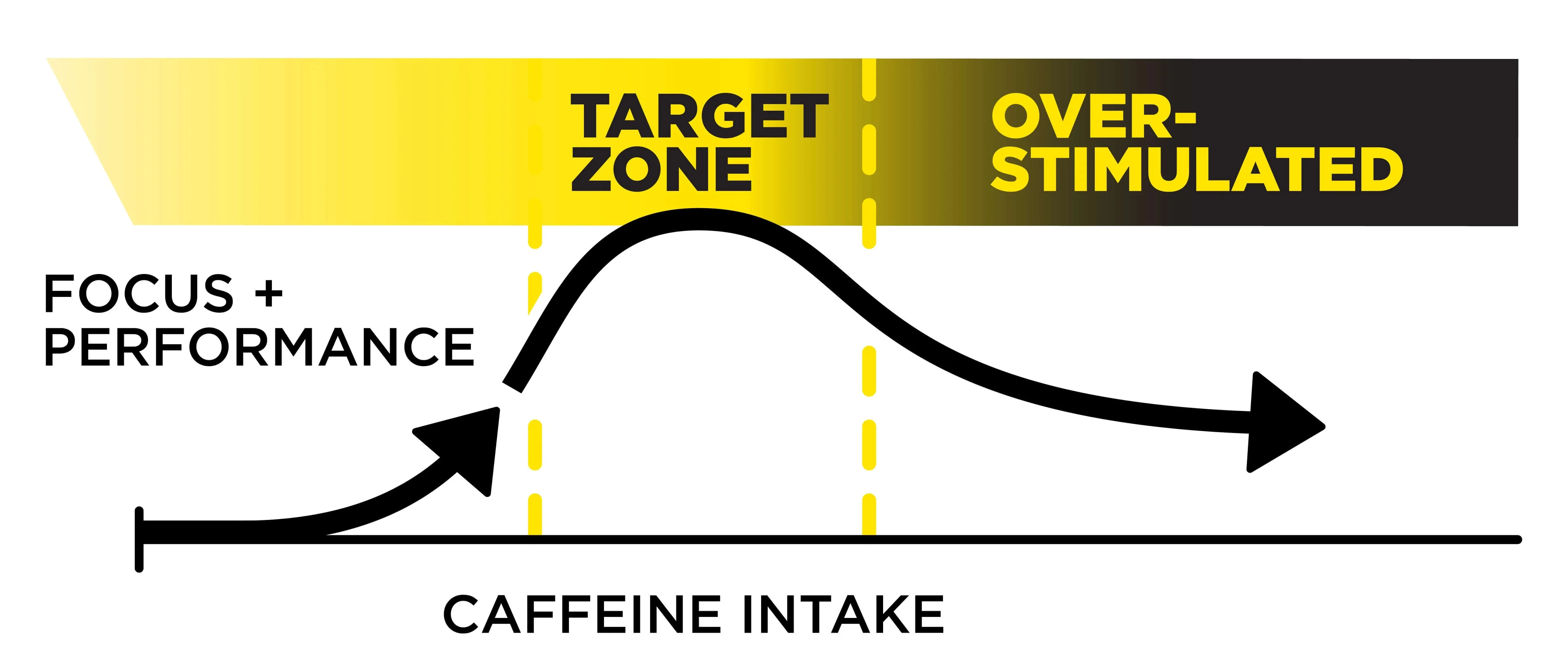
Caffeine follows a classic dose-response curve: Benefits rise, then level off before declining.
Here’s what’s happening under the hood: Caffeine blocks the sleepiness-inducing chemical adenosine from binding to its receptors, delaying feelings of fatigueOpens in a new tab. Specifically, it counters adenosine's suppressive effects on the nervous system and triggers a relative increase in the concentration and activity of hormones like dopamineOpens in a new tab, norepinephrineOpens in a new tab, and epinephrineOpens in a new tab, which sharpen alertness and lift mood.
So far, so good. But crank the dose too high and those mechanisms start working against you in a couple of ways:
- Circulating norepinephrine and epinephrineOpens in a new tab can spike with high dosesOpens in a new tab, which can elevate blood pressure, trigger heart palpitations, and make you feel jittery and anxious.
- Adenosine continues to accumulateOpens in a new tab in the background as caffeine blocks its receptors. Once caffeine is metabolized, the built-up adenosine can bind to them again, leading to a dramatic onslaught of exhaustion, brain fog and irritability (a caffeine “crash”). The more you've been using caffeine to put off sleep, the more adenosine will be present to bind, and the bigger the crash.
Bottom line here: Caffeine tricks your brain into thinking it’s not tired while boosting neurotransmitter activity. But it comes at a cost. If you were theoretically trying to stay awake as long as possible (not recommended), you’d delay caffeine as long as you could, start tiny, and ramp slowly. Eventually adenosine wins, you crash, and lingering caffeine can trash subsequent sleep quality.
What does this mean practically? Some find noon is pushing it for a pick-me-up. Others put a hard stop at 2 pm. This will depend on the individual, caffeine dose, total stress levels and a host of other factors.
The case for smaller doses
You'll likely get most of the upsides of caffeine with far fewer downsides from repeated small doses rather than heroic boluses. If you just jam on the accelerator — 200 mg in one whack — there’s a greater chance you’ll crash and feel like garbage after that.
Single, low dosesOpens in a new tab of caffeine are reliably shown to improve alertness, attention, reaction time, mood, and physical performance without negative impacts:
- Cognitive benefits — reaction time, alertness, accuracy, and sustained attention — show up in doses as low as 12.5Opens in a new tab to 50 mgOpens in a new tab.
- Physical benefits — strength, endurance, and speed — start around 0.9 mg per kilogram Opens in a new tabof body weight. For a 185-pound person, that's about 76 mg of caffeine.
Approach or push past 400 mg in a day and you’re more likely to experience shakiness, anxiety,Opens in a new tab subpar sleepOpens in a new tab, and GI distressOpens in a new tab. For folks who are more caffeine sensitive, diminishing returns may strike earlier — think: even consuming just 200 or 300 mg of caffeine in a day can tip the scale.
And it’s easier to overshoot than you might think. A cup of tea has, on average, around 48 mg per cup. Standard drip coffee has roughly 96 mg per cup. A cup of a stronger brew (common at some popular chains) can run 158 to 195 mg. Cans of energy drinks can pack a 160 to 300 mg punch.
Stack a few of these together — a 12 to 16 ounceOpens in a new tab coffee (144 to 192 mg of caffeine) and an energy drink later in the day — and you’re well past the 400 mg daily threshold.
The best way to make sure you don’t overshoot is to find your minimum effective dose: the smallest amount that gives you the benefits you want and prevents the downsides you don’t.
How to find your personal minimum effective dose
Your personal minimum effective dose will depend on metabolism and tolerance.
To find your minimum effective dose:
- Begin lower than you think you need — 50 mg, roughly 4 oz of coffee or one stick pack of LMNT Lemonade Iced TeaOpens in a new tab, is a good starting point.
- Over the next 1 to 2 hours, notice changes in alertness, focus, energy, and mood.
- Watch for downsides like shakiness, anxiety, or GI issues later in the day or sleep disruptions that night.
- Adjust gradually. Minimal benefit? Bump up by 10 to 25 mg next time. Downsides? Pull back.
Another option is to work backwards. Cut your usual dose by a fraction (a quarter or a third) and see if the benefits hold and the negative effects lessen. Keep trimming every few days until you find your minimum effective dose while minimizing side effects.
How to Time Caffeine Intake For Performance
Early in the day, caffeine tends to support performance. Later, it's more likely to work against you.
Research shows caffeine (at the right dose for you) appears most useful during natural low-arousal windowsOpens in a new tab — first thing in the morning and around the early afternoon slump:
- One studyOpens in a new tab found caffeine improved reaction time, attention, and physical performance gains at every time of day. But the biggest improvements to cognition came at 7 a.m. and 1 p.m. and to physicality at 7 a.m. and 3 p.m., when baseline performance and arousal tend to be low.
- AnotherOpens in a new tab found that caffeine before a morning workout brought squat strength up to levels typically seen later in the day, while the same dose before an afternoon workout added nothing.
Sleep disruptionsOpens in a new tab often creep in with later intake. Caffeine's half-lifeOpens in a new tab — the time it takes for blood levels to drop by 50% — averages 4 to 5 hoursOpens in a new tab but you are not average. Slow metabolizers can take north of 9.5 hoursOpens in a new tab to fully metabolize caffeine. If those folks (I’m in that camp) have 200mg around 3 p.m. in the afternoon, they might have a hard time winding down come 10 p.m.
There's real individual variation hereOpens in a new tab. LMNT co-founder Luis Villaseñor can have a quad espresso after dinner and sleep like a champ — he’s a fast caffeine metabolizer. Most folks — including myself — aren't Luis. For us, late caffeine can quietly degrade sleep, which shows up as next-day fatigue, which drives reaching for more caffeine, keeping the cycle brewingOpens in a new tab.
If you do any sleep tracking, or heart rate variability and sleep or recovery are not as good as you’d like, shifting your caffeine intake earlier is a smart first experiment — call it N=1 tinkering.
Timing strategy: use caffeine ahead of demand
Many people reach for caffeine when they're already dragging. But a moderate dose before you want the benefits lets caffeine peak when you need it.
Research often cites 200–400 mgOpens in a new tab 60 minutes prior to exercise as being the ideal dose and time, but that’s often too high in practice. Most of the hard chargers I’ve worked withOpens in a new tab do well with 50 mgOpens in a new tab. Here's the dose-response curve often looks like:
- First effects: 15 minutesOpens in a new tab
- Peak effect: 30–90 minutesOpens in a new tab after consumption
- Benefits (focus, alertness, mood lift) hold for roughly 3–5 hours. Fast metabolizers may notice effects sooner (and fade sooner); slow metabolizers may have a more gradual onset and a longer tail.
Play around with the timing to see what works best for you.
For sustained physical or cognitive performance over several hours, try splitting your intake.
- Consume 50 mg in a single serving.
- When the benefits of that dose starts to fade — you notice mounting fatigue, waning alertness and motivation, and increased perceived effort — consume another 50 mg. And keep stacking until you start noticing negative side effects like jitters, anxiety, a racing heart, or trouble falling asleep that night.
Caffeine affects everyone differently, so it's worth experimenting to find your own cutoff time — as in, the latest you can have caffeine without it disrupting your sleep.
Caffeine Cycling, Explained
With repeated exposure, you may build up a tolerance to caffeine’s stimulating effects, so the same dose may produce less obvious benefits.
There isn’t much research in humans, but studies in animals suggest that with regular intake, the brain creates more adenosine receptorsOpens in a new tab so larger doses of caffeine are needed to block them to achieve the same effect. The receptors also become more sensitiveOpens in a new tab and primed to bind to adenosine more readily, so fatigue signals hit harder when caffeine isn't in the picture.
If you notice that you need more caffeine to get its benefits (or to just feel “normal”), consider caffeine cycling — temporarily pausing intake, then reintroducing it at a lower dose.
Going cold turkey can be really rough. Neuroscience professor, sleep expert, and LMNT Partner Matt Walker, PhDOpens in a new tab suggests cutting back with a slow taper and seeing how things go. Cut your dose by 25Opens in a new tab–Opens in a new tab50%Opens in a new tab every few days every few days until you're at zero. This approach takes longer but may spare you the worst of withdrawal symptoms.
Honestly, most people won't cycle — and that's fine. Find your minimum effective dose, stay under your personal ceiling (the point where overshoot shows up as jitters, anxiety, or disrupted sleep), find your personal cutoff time, and you'll get the benefits without the downsides.
Personally, I've found my life is better with coffee and tea in it, and that less is more. That's really the whole point.
The Bottom Line: How to Personalize Dose and Timing
We don’t all respond to caffeine the same way. The dose and timing that works great for someone else might leave you wired or flat.
The best way to find your target zone is to experiment and watch for these signals:
- Onset: How quickly do you feel the effects of caffeine after consuming it?
- Quality: Is the stimulation smooth and supportive, or fidgety and frenzied?
- Offset: Gradual fade, or hard crash?
- Spillover: Any effects on sleep, mood, or recovery later that day — or the next?
Based on what you find, continue tweaking the variables. Move your intake earlier, adjust the dose, split it differently. When you use dose, timing, and cycling as tactical levers, caffeine works for you.
We’ve talked a lot about the benefits of caffeine in this article — it’s time to dive into those a little deeper. The next two articles cover caffeine's effects on physical performanceOpens in a new tab and on mental performance and neuroplasticityOpens in a new tab.
This was the third article in our six-part caffeine education series. Want to read the other articles? Check them out below:
- How caffeine works: The science behind perceived energyOpens in a new tab
- Why your caffeine tolerance is different from everyone else’sOpens in a new tab
- How caffeine influences mental performanceOpens in a new tab
- How caffeine influences physical performanceOpens in a new tab
- Is all caffeine the same? Why the source mattersOpens in a new tab